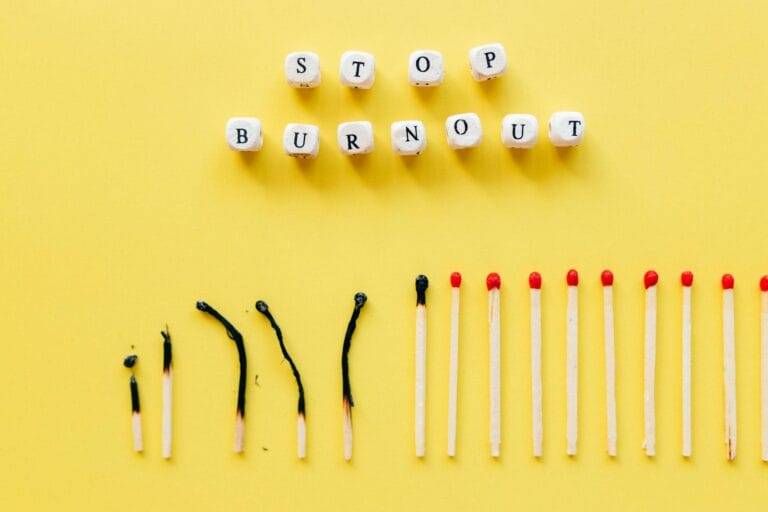

Anxiety Vs Stress What Is The Difference
I’ll be honest, I spent years thinking stress and anxiety were basically the same thing, just different words for feeling overwhelmed. It wasn’t until I started paying closer attention to my own patterns that I realized they were pulling me in completely different directions. If you’ve ever felt your chest tighten before a big presentation or found yourself lying awake at 2 a.m. replaying a work conversation from three days ago, you’ve probably wondered about anxiety vs stress what is the difference, and whether what you’re feeling is one, the other, or both. For busy professionals, these two experiences often blend together in ways that make them genuinely hard to tell apart. But understanding the distinction matters, because each one responds to different strategies. Let’s break it down in plain language, backed by real science, so you can actually do something useful with the information.
Why Stress and Anxiety Feel So Similar
Stress and anxiety share a lot of real estate in the body. Both trigger the release of cortisol and adrenaline. Both can cause a racing heart, shallow breathing, muscle tension, and disrupted sleep. Both are processed through the brain’s threat-detection system, the amygdala, which doesn’t always bother distinguishing between a looming deadline and a genuine physical danger. This biological overlap is exactly why so many of us use the words interchangeably, even though clinically and functionally, they’re quite different experiences.
Think of them as cousins rather than twins. They share DNA, but they live different lives.
What Stress Actually Is
Stress is a response to an external trigger. It has a source you can usually point to: a project deadline, a difficult conversation with your manager, financial pressure, a packed schedule with no breathing room. Stress is your nervous system’s way of mobilizing resources to meet a demand. In moderate doses, it actually improves performance, researchers call this eustress, or beneficial stress, the kind that sharpens focus before an important meeting.
The key feature of stress is that it tends to resolve when the stressor goes away. You submit the project, the deadline passes, the conflict gets resolved, and your nervous system begins to settle. Stress is situational. It has a beginning, a middle, and typically an end.
Common signs of stress include:
- Irritability or short temper tied to a specific situation
- Difficulty concentrating on tasks that feel overwhelming
- Physical tension, especially in the neck, shoulders, or jaw
- Fatigue that eases after rest or after the stressor is removed
- A clear sense of what is causing the feeling
What Anxiety Actually Is
Anxiety is different in one critical way: it persists even when there’s no immediate external threat. According to the American Psychological Association, anxiety involves “persistent, excessive worry that doesn’t go away even in the absence of a stressor.” That’s the defining feature. The threat becomes internal, diffuse, and often difficult to name. You might feel dread without knowing exactly why, or worry about scenarios that haven’t happened and likely won’t.
According to the National Institute of Mental Health, anxiety disorders affect approximately 19.1% of adults in the United States each year, making them the most common category of mental health condition in the country. That statistic matters because it tells you that if you’re struggling, you’re far from alone, and that what you’re experiencing has a name, a mechanism, and real solutions.
Anxiety tends to involve:
- Worry that feels disproportionate to the actual situation
- Difficulty switching off thoughts even during downtime
- A sense of anticipatory dread about future events
- Physical symptoms like a tight chest or restlessness that appear without an obvious cause
- Avoidance of situations that might trigger discomfort
Anxiety can exist with or without a diagnosable anxiety disorder. You can experience significant anxiety without meeting the clinical criteria for Generalized Anxiety Disorder, Social Anxiety Disorder, or Panic Disorder, and still find that it meaningfully disrupts your daily life. Both ends of the spectrum deserve attention.
The Practical Difference That Changes How You Respond
Here’s where the distinction becomes genuinely useful rather than just academic. If you’re primarily dealing with stress, the most effective strategies involve reducing or managing the external demands on your system: time management, boundary-setting, delegating, rest, and recovery. Remove or restructure the stressor, and your nervous system can do the rest.
If you’re dealing with anxiety, the approach is different. Because the threat is internal and often future-oriented, strategies need to target the thought patterns themselves, not just the external situation. Cognitive reframing, mindfulness-based techniques, somatic practices, and in some cases professional support work by interrupting the anxiety cycle at the source, the mind’s tendency to generate and rehearse threats that don’t yet exist.
Trying to solve anxiety purely through productivity optimization, more planning, more control, more efficiency, often backfires. I know from experience that you can clear your calendar completely and still feel anxious, because the calendar was never really the problem.
How to Start Telling Them Apart in Your Own Life
Most professionals find it helpful to do a simple self-audit when they notice tension building. This isn’t a diagnostic tool, it’s a starting point for self-awareness that can guide your next move.
- Name the feeling in your body. Where do you feel it, chest, stomach, shoulders? Write it down or say it out loud. This alone activates the prefrontal cortex and slightly reduces the intensity of the emotional response.
- Ask: can I point to a specific cause? If yes, you’re likely dealing primarily with stress. If the feeling is vague or the “cause” keeps shifting, anxiety is more likely in the driver’s seat.
- Ask: would this feeling go away if the situation resolved? Imagine the stressor disappearing. Does the tension lift in your imagination? If yes, stress. If you immediately generate the next worry to replace it, anxiety is involved.
- Check the timeline. Has this feeling been present consistently for more than two weeks, regardless of what’s happening externally? Chronic presence is a hallmark of anxiety rather than situational stress.
- Decide on your first action. For stress: identify one boundary, task, or commitment you can adjust today. For anxiety: practice five minutes of diaphragmatic breathing, reach out to a therapist, or try a structured worry-journaling exercise to externalize the loop.
When to Take It Seriously
Both stress and anxiety become problematic when they’re chronic. Long-term elevated cortisol affects memory, immune function, cardiovascular health, and metabolic regulation. Professionals in high-demand environments often normalize stress and anxiety because everyone around them seems to be operating the same way, but collective suffering isn’t a benchmark for healthy functioning. Many of us have felt that quiet pressure to just push through, and it’s worth questioning where that pressure is actually coming from.
If your symptoms are interfering with your sleep, your relationships, your ability to be present, or your physical health, that’s worth taking seriously. A licensed therapist, particularly one trained in Cognitive Behavioral Therapy or Acceptance and Commitment Therapy, can make a measurable difference in a relatively short timeframe. This isn’t a sign of weakness; it’s a strategic investment in the system you rely on to do everything else in your life.
Frequently Asked Questions
Can you have stress and anxiety at the same time?
Yes, absolutely. They frequently co-exist. A demanding job might create real stress, and that stress environment might also trigger or amplify anxiety patterns that then persist beyond the immediate demands. Addressing them simultaneously, with different tools for each, is often the most effective approach.
Is it possible to have anxiety without feeling anxious?
Yes. Anxiety doesn’t always look like obvious worry or panic. It can show up as chronic procrastination, physical tension with no clear cause, frequent irritability, difficulty making decisions, or a general sense of low-level dread that you’ve learned to live around. Many professionals carry significant anxiety that they’ve normalized as “just how they are.”
Do I need to see a doctor or therapist to manage these?
Not necessarily for mild or situational cases, self-help tools like mindfulness, sleep hygiene, exercise, and journaling are well-supported by research for both stress and mild anxiety. However, if symptoms are persistent, intense, or getting in the way of your life, a professional can significantly accelerate recovery and help you avoid the years of trial-and-error that come with going it alone.
Final Thoughts
The bottom line is that stress and anxiety aren’t the same thing, but they’re not completely separate either. Stress responds to the world around you; anxiety responds to the world inside your head. Learning to tell the difference is one of the most practical mental wellness skills a busy professional can build, not because it makes life perfectly manageable, but because it points you toward the right lever to pull when things feel overwhelming. You don’t have to white-knuckle your way through either one. Start with curiosity, use the tools that match what you’re actually experiencing, and give yourself the same quality of attention you’d give any other high-priority problem in your life.
Related Articles
- Signs Of High Functioning Anxiety
- Breathing Exercises For Anxiety Relief
- How To Build Emotional Resilience