
How To Create A Productive Workspace
I’ll be honest, I spent years working from my couch, my kitchen counter, and occasionally a very uncomfortable dining chair before I finally figured out that my environment was quietly sabotaging me. If you’ve been wondering how to create a productive workspace, you’re not alone, and the answer goes well beyond buying a fancy desk. Where you work has a measurable impact on how well you think, how long you focus, and how energized you feel by the end of the day. Whether you’re working from a studio apartment, a college dorm, or a corporate office, the principles are the same. Small, intentional changes to your environment can produce real results without requiring a full renovation or a big budget.
Why Your Environment Shapes Your Output
Your brain is constantly reading environmental cues. Noise, light, clutter, temperature, all of it feeds into your cognitive state before you even open a laptop. According to a 2023 study published by the American Psychological Association, workers in cluttered environments reported significantly higher levels of cortisol (the stress hormone) compared to those in organized, visually calm spaces. That’s not a minor detail, chronic stress directly undermines memory, decision-making, and creative thinking. The good news is that your workspace is one of the few things in your professional life you can actually control.
Think of your workspace as a tool, not just a location. A hammer works better when it’s sharp and the right size for the job. Your desk, chair, lighting, and even the objects around you all function the same way, they either help you do the work, or they silently work against you.
The Foundation: Choosing and Claiming Your Space
Before you start buying ergonomic accessories or color-coding your planners, you need to establish a dedicated spot. This sounds obvious, but many people skip it, I know I did for longer than I’d like to admit. Working from the couch, the kitchen table, and the bedroom in random rotation sends a confusing signal to your brain, it never fully associates any one place with focused effort.
- Pick a spot you can return to consistently, even if it’s small
- Separate your workspace physically from your relaxation areas when possible
- If you have limited space, use visual anchors (a specific lamp, a desk mat) to signal “work mode”
- Avoid setting up where you’ll constantly be interrupted by foot traffic or household noise
The goal is psychological association. Over time, sitting down in that specific spot should naturally shift your mindset toward focus. Athletes call this a pre-performance routine, your workspace can function the same way.
How to Set Up Your Workspace Step by Step
Once you’ve got your spot, here’s how to actually build it out in a way that supports productivity rather than just looking good for Instagram photos.
- Get your ergonomics right first. Your chair height, monitor position, and keyboard placement matter more than almost anything else. Your screen should sit at eye level so your neck isn’t bent downward for hours. Your feet should rest flat on the floor or a footrest. Spending eight hours in a position that strains your body means you’ll be fighting physical discomfort all day instead of focusing on your work.
- Optimize your lighting. Natural light is genuinely the best option, position your desk near a window if you can, but angle your screen to avoid glare. If natural light isn’t available, choose a warm-white LED lamp that mimics daylight. Overhead fluorescent lighting alone tends to cause eye fatigue faster and can affect your mood over long sessions.
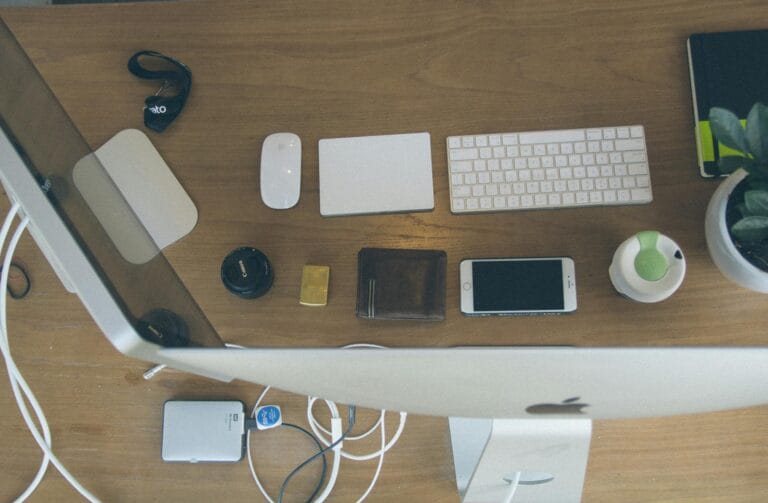
- Declutter aggressively, then organize what stays. Remove everything from your desk surface that doesn’t serve your current work. This isn’t about minimalism as an aesthetic, it’s about reducing the number of things competing for your attention. Keep only the essentials within arm’s reach. Use drawers, small organizers, or shelves for everything else. A clear surface makes it easier to start tasks because there’s no visual friction standing between you and the work.
- Control your sound environment. Background noise affects people differently. Some people focus better with light ambient sound, while others need near silence. Experiment honestly, try working with lo-fi music, white noise, or complete quiet on separate days and notice which produces the best concentration. If your environment is loud and you can’t change it, noise-canceling headphones are one of the highest-return investments a remote worker or student can make.
- Add one or two intentional personal touches. A photo, a plant, or a meaningful object can increase your sense of ownership over the space, which subtly increases motivation. Research on environmental psychology suggests that people perform better in spaces they feel personally connected to. The keyword is intentional, don’t use this as an excuse to clutter your desk with random items.
Temperature, Air Quality, and the Details Most People Ignore
Here’s something most workspace guides skip right over: air quality and temperature have a measurable effect on cognitive performance. Studies have found that working in rooms with poor ventilation or high CO2 levels slows response time and reduces the ability to focus. Open a window when the weather allows. If you’re in a sealed office environment, a small desk fan or air purifier can help keep the air moving.
Temperature is worth paying attention to as well. Most people focus best in environments between 70–77°F (21–25°C). If your space runs too warm, you’ll feel sluggish. Too cold, and you’ll be distracted by discomfort. If you can’t control the thermostat, dress in layers or keep a small personal fan or heater at your desk.
Keeping It Productive Over Time
Setting up a productive workspace is one thing, maintaining it is another. Many of us have felt that slow creep of chaos returning after we put in all that effort to get organized. A few simple habits can prevent that from happening.
- Do a 5-minute reset at the end of each workday, clear your desk, close your tabs, and put things back where they belong
- Reassess your setup every few months, your work needs change, and your space should adapt
- Keep cables managed and out of sight; tangled cords create visual clutter that’s easy to ignore but quietly draining
- Replace burned-out bulbs and broken equipment promptly, small friction points accumulate into big resistance over time
The workspace that works best for you in February might need adjustments by summer. Stay curious and willing to tinker. Productivity isn’t a fixed state you achieve, it’s something you actively maintain.
Quick Wins You Can Implement Today
Not everyone has time for a full workspace overhaul. If you want results fast, here are changes you can make in the next thirty minutes that’ll have an immediate impact.
- Clear everything off your desk and only put back what you actually use daily
- Raise your laptop or monitor to eye level using books or a stand
- Move your phone to a different room or at minimum, place it face-down and on silent
- Open a window or turn on a lamp to improve lighting
- Put on headphones with a consistent sound environment before you start working
These aren’t life hacks, they’re practical adjustments based on how attention and focus actually work. Start here and build from there.
Frequently Asked Questions
Do I need a dedicated room to have a productive workspace?
Not at all. A dedicated room is ideal but far from necessary. Plenty of people build highly effective workspaces in corners of living rooms, bedroom nooks, or even shared kitchen areas. What matters more than square footage is consistency, returning to the same spot and using visual or sensory cues to signal focus time to your brain.
How much should I spend on setting up a productive workspace?
You can make meaningful improvements for almost nothing. Rearranging furniture, decluttering, adjusting lighting, and managing your phone are all free. If you do want to invest, the highest-return items for most people are a good chair, a monitor stand or laptop riser, and noise-canceling headphones. You don’t need to do it all at once, prioritize based on what’s causing the most friction in your current setup.
Should I decorate my workspace or keep it minimal?
Both approaches work, but for different people. If visual clutter distracts you, go minimal. If a bare environment feels cold and uninspiring, a few personal touches can genuinely boost motivation. The research supports a middle ground, spaces that are personalized but not cluttered tend to support both focus and wellbeing. Add what’s meaningful, remove what’s just background noise.
Final Thoughts
The bottom line is that learning how to create a productive workspace isn’t about perfection or aesthetics, it’s about understanding what your brain and body actually need to do focused, sustained work. Start with the basics: a consistent spot, good ergonomics, decent lighting, and a clear surface. Then pay attention to how you feel and work in that space, and adjust accordingly. Your environment is one of the most underestimated tools in your productivity toolkit, and the best part is that you’ve already got everything you need to start improving it today.