Evening Routine Ideas For Better Productivity
If you’ve been searching for evening routine ideas for better productivity, you’re probably already aware that what you do before bed has a direct impact on how well you perform the next day. Most productivity advice focuses on morning routines, but the evening is where the real setup happens. A structured wind-down signals your brain to shift gears, consolidates what you learned during the day, and positions you to hit the ground running when you wake up. The good news is that you don’t need a two-hour ritual to see real results — even 30 focused minutes can make a measurable difference.
Why your evening routine matters more than your morning one
Here’s the thing most productivity guides skip: your morning performance is largely determined the night before. Sleep quality, stress levels, and mental clarity when you wake up are all shaped by how you ended the previous day. According to a 2022 study published in the journal Sleep Medicine Reviews, pre-sleep cognitive arousal — basically, an active, unresolved mind at bedtime — is one of the strongest predictors of poor sleep quality and next-day cognitive impairment. In plain terms, if you go to bed with a swirling to-do list and unfinished mental loops, your brain doesn’t fully rest, and your focus the next morning pays the price.
This is especially relevant for professionals and students aged 22 to 40, who are often juggling work deadlines, side projects, social commitments, and personal goals simultaneously. Building a consistent evening routine is less about self-discipline and more about designing your environment so that rest and recovery happen almost automatically.
The building blocks of an effective evening routine
Before getting into specific steps, it helps to understand what a good evening routine is actually trying to accomplish. It has four main jobs:
- Close out unfinished mental loops from the day
- Lower your nervous system’s activation level so sleep comes faster
- Set a clear intention for the following morning
- Create physical and environmental cues that tell your body it’s time to wind down
When you approach your evening with these goals in mind, the specific activities matter less than whether they’re serving one of those functions. Journaling, a short walk, reading a physical book, planning tomorrow’s schedule — all of these work because they address one or more of those four needs. Scrolling through social media, on the other hand, stimulates novelty-seeking behavior in your brain and keeps cortisol elevated, which is the opposite of what you want in the hour before sleep.
How to build your evening routine step by step
Here’s a practical framework you can adapt to your own schedule. This works whether you go to bed at 10 PM or midnight — the key is working backward from your target sleep time and blocking out about 45 to 60 minutes for this process.
- Do a brain dump at the end of your workday. Before you close your laptop or leave your workspace, spend five minutes writing down every open task, nagging thought, or unresolved item on your mind. This isn’t your to-do list for tomorrow — it’s a mental offloading exercise. Research on the “Zeigarnik effect” shows that unfinished tasks occupy mental bandwidth until they’re either completed or externalized. Writing them down tells your brain it can let go for now.
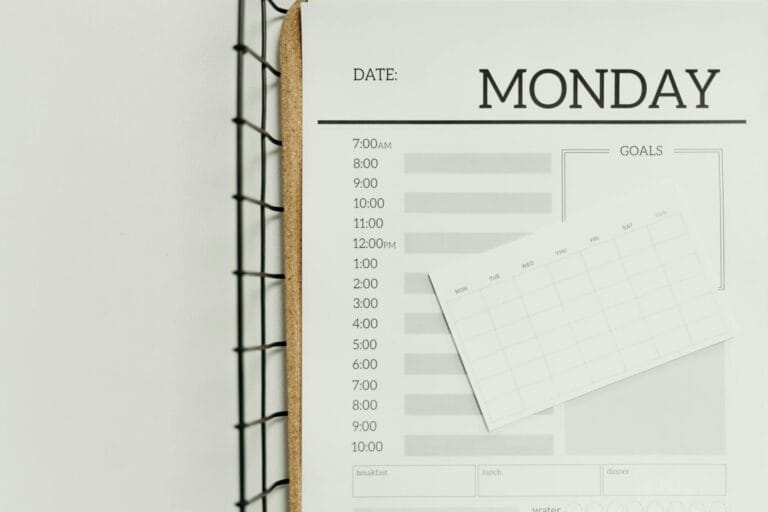
- Plan tomorrow in under 10 minutes. Pick your top three priorities for the next day and write them down somewhere you’ll see them in the morning. This step is powerful because it removes decision-making from your morning, when willpower and focus are still warming up. You wake up knowing exactly what matters, which means you’re less likely to get pulled into reactive tasks like email before you’ve done meaningful work.
- Create a physical transition. Change out of work clothes if you’re at home, take a short walk, or do a 10-minute stretch. This sounds trivial but it’s not. Physical transitions act as behavioral cues that tell your nervous system the work context is over. Many remote workers skip this and find that work stress bleeds into the evening because there was never a clear boundary. A physical action, even a small one, creates that boundary.
- Limit screens for the last 30 to 45 minutes before bed. Blue light from screens suppresses melatonin production, but the bigger issue is content. News, social media, and work emails trigger emotional and cognitive responses that take time to settle. Replace screen time with reading, a podcast, light stretching, or a conversation. If you must use a device, switch to night mode and stick to low-stimulus content.
- Keep a consistent sleep and wake time. This one sounds obvious, but it’s the most skipped. Your circadian rhythm is a biological clock that works best when it gets consistent input. Going to bed at wildly different times each night — even if you get the same total hours — disrupts the rhythm and reduces the restorative quality of your sleep. Aim for no more than a 30-minute variance in your bedtime across the week, including weekends.
Small tweaks that make a big difference
Once you have the basic framework in place, there are a few lower-effort habits worth layering in. These aren’t mandatory, but many people find that one or two of them significantly improve how they feel in the morning.
- Prepare your workspace or bag the night before so you don’t waste morning energy on logistics
- Set out your workout clothes, meal, or anything else you’ll need first thing — this removes friction from habits you’re trying to build
- Write down one thing that went well during the day, which research from positive psychology links to improved mood and reduced anxiety over time
- Avoid large meals and alcohol within two to three hours of bedtime, as both fragment deep sleep cycles even when they feel like they help you wind down
Common mistakes people make with evening routines
The biggest mistake is making the routine too complicated. If your ideal evening plan takes 90 minutes and requires total silence, a yoga mat, and a specific tea, it will collapse the first time your schedule is disrupted. Build your core routine around habits that take 30 minutes or less and can survive a busy or imperfect day.
Another common issue is treating the evening routine as optional on weekends. Weekends are actually where most people sabotage their weekday performance. Staying up two or three hours later on Friday and Saturday and then trying to reset on Sunday night creates what researchers call “social jetlag” — a misalignment between your internal clock and your social schedule that produces symptoms similar to actual jet lag, including reduced concentration and slower reaction times on Monday morning.
Finally, don’t confuse winding down with doing nothing. Passive relaxation like watching TV for three hours isn’t the same as an intentional routine. The goal is active decompression — giving your brain the signals and space it needs to transition from output mode to recovery mode.
Frequently Asked Questions
How long should an evening routine actually be?
Somewhere between 30 and 60 minutes is enough for most people. You don’t need a lengthy ritual. What matters more than duration is consistency. A 30-minute routine you do every night is far more effective than a 90-minute one you do three times a week.
What if I get home late and don’t have much time before bed?
Compress the routine rather than skip it. Even 15 minutes works if you prioritize the two highest-impact elements: writing down tomorrow’s top priorities and doing some kind of physical or environmental transition away from work mode. The brain dump and the screen cutoff can be shortened or combined. The goal is to create some signal that the work day is done.
Can an evening routine help with anxiety and stress, not just productivity?
Yes, and the two are connected more than people realize. A structured evening routine reduces cognitive arousal before sleep, which is one of the main physiological drivers of anxiety at bedtime. When you externalize your tasks through writing, plan the next day, and lower your nervous system activation through physical and environmental cues, you’re directly addressing the mental patterns that feed nighttime anxiety. Several therapists who work with high-functioning professionals recommend some version of this routine specifically for managing work-related stress.
Final thoughts
Building an evening routine isn’t about becoming a different person or adopting a rigid lifestyle. It’s about recognizing that rest is part of the performance equation and designing the end of your day to support it. Start with just two of the steps above — the brain dump and tomorrow’s priorities — and add more only when those feel automatic. According to research by Phillippa Lally at University College London published in 2010, simple daily habits take an average of 66 days to become automatic, so give it at least two months before deciding whether it works for you.