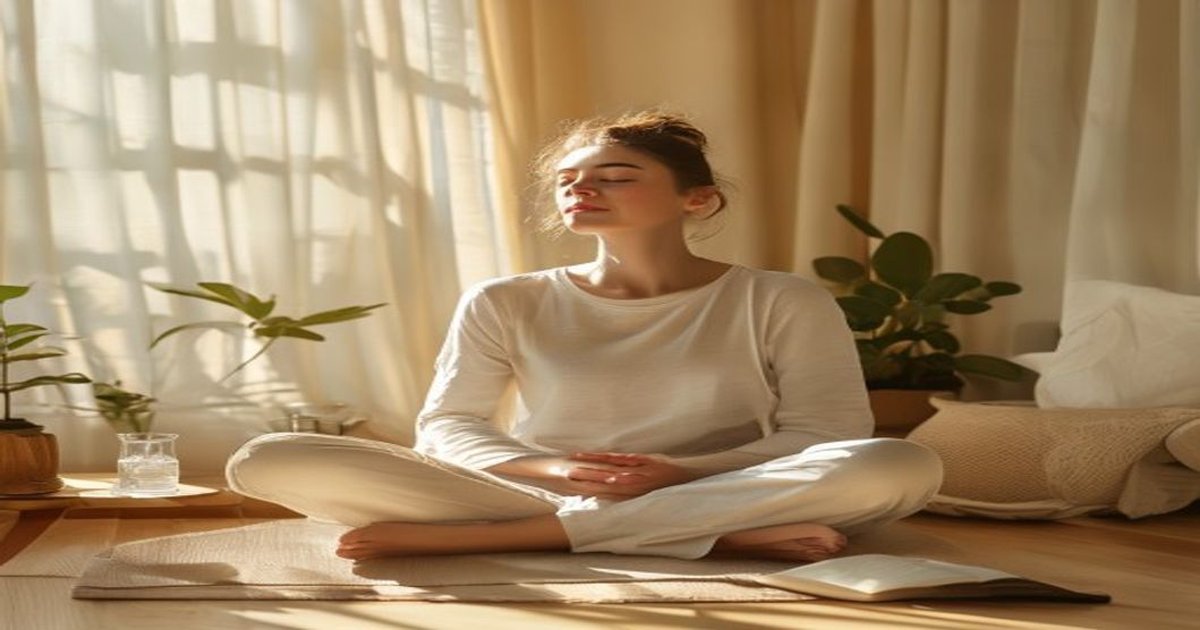
Your mind won't stop racing, and you're exhausted from trying to quiet it down. This is how to relax your mind when everything feels overwhelming and urgent.
Most people think relaxation means sitting still for hours. That's unrealistic. Real mental relaxation happens in minutes with the right technique tailored to your nervous system.
You don't need expensive apps or retreats. You need simple, science-backed methods you can use right now, tonight, tomorrow morning, whenever your mind needs relief.
Mental relaxation is the practice of deliberately calming your nervous system and reducing mental chatter. The 5 fastest ways to relax your mind include box breathing, body scanning, cognitive pause, guided visualization, and progressive muscle relaxation, each proven to lower cortisol in under 10 minutes.
What Is Mental Relaxation and Why Your Mind Needs It
Mental relaxation is the active process of quieting your nervous system and releasing tension from racing thoughts, anxiety, and mental fatigue. It's not about forcing your brain to be blank; it's about intentionally shifting from stress mode to calm mode.
When your mind won't stop working, your brain is stuck in sympathetic nervous system activation (fight-or-flight). Research from Harvard Medical School shows that chronic mental tension raises cortisol levels by 20-30%, which damages sleep, immunity, and emotional resilience. Your body physically can't relax until your mind gives it permission.
Here's the action: Understand that mental relaxation is a skill you train, not a luxury you earn. Start by naming what you're experiencing right now. Is your mind racing? Looping on a problem? Anxious about the future? Naming it creates distance from it.
- Mental stress triggers physical tension in your jaw, shoulders, and chest
- A busy mind fires approximately 6,000 thoughts per day without your control
- True relaxation requires engaging the parasympathetic nervous system (rest-and-digest mode)
- Most people can shift their mental state in 3-10 minutes with the right tool
What Are the Signs Your Mind Needs Immediate Relaxation
You don't have to be diagnosed with anxiety to need mental relaxation. Your mind sends clear signals when it's overloaded and stuck in stress mode. Recognizing these signs is the first step to relieving them.
Studies from the National Institute of Mental Health indicate that 40% of people experience racing thoughts at night, looping worry during the day, or constant mental restlessness. If left unchecked, this state leads to burnout, poor focus, and emotional fragility. Your mind is literally running on empty.
The breakthrough: These symptoms are your mind asking for help, not a sign you're broken. Listen to them. When you notice any of these patterns, that's your cue to pause and use a relaxation technique immediately, before the stress snowballs.
- Your thoughts loop on the same problem repeatedly without solving it
- You feel mentally tired even after sleeping 8 hours
- You can't focus on one task because your mind jumps between worries
- Your jaw is clenched or your shoulders are tight without realizing it
- You replay conversations or imagine worst-case scenarios involuntarily
- You feel restless at night and can't "turn off" your brain
- Small annoyances trigger disproportionate emotional reactions
Why Does Your Mind Get Stuck in Stress Mode
Your brain is designed to keep you alive, not to help you relax. When your mind perceives any threat (real or imagined), it activates your stress response and keeps it running until you consciously interrupt the cycle.
Neuroscience research shows that your amygdala (threat-detection center) fires faster than your prefrontal cortex (rational thinking center). This means your mind jumps to "danger" before your rational brain can say "calm down." Modern life amplifies this: notifications, news, work deadlines, and social media all trigger your threat response dozens of times daily. Your nervous system never gets a genuine break.
The truth: Your mind isn't broken for struggling to relax. Your nervous system is doing exactly what evolution designed it to do, but in a world full of false alarms. This is why you need deliberate relaxation techniques. Your body won't rest without them.
- Stress hormones (cortisol, adrenaline) take 20+ minutes to leave your bloodstream after a stressor passes
- Your brain creates stress pathways that become stronger each time you worry about the same thing
- Chronic unaddressed mental tension physically rewires your brain to be more reactive
- Without intentional relaxation, your nervous system defaults to "alert" mode even during rest
- Social media and work emails keep your threat response activated throughout the day
How to Relax Your Mind: 5 Proven Mental Relaxation Techniques
These techniques work because they directly activate your parasympathetic nervous system (the brake pedal on stress). Pick the one that feels most natural to you, then practice it consistently until it becomes automatic. You don't need to master all five; you need one you'll actually use.
1. Box Breathing (90 seconds)
Breathe in for 4 counts, hold for 4, exhale for 4, hold for 4. Repeat 4-5 times. This technique is used by Navy SEALs and emergency responders because it works fast. The equal-length breathing pattern signals safety to your nervous system immediately.
2. Body Scan Meditation (5-10 minutes)
Close your eyes and mentally scan from your toes to the top of your head, noticing tension without judgment. This interrupts the mind's chase after thoughts because it anchors your attention to physical sensation instead. Harvard research shows body scanning reduces anxiety by 39% in just one session.
3. The Cognitive Pause (2 minutes)
Write down the thought that won't stop looping. Say out loud: "I notice this thought, but I'm choosing to pause it now." Then physically close the notebook. This gives your mind permission to release the thought because you've acknowledged and contained it. Your brain doesn't let go of unfinished business; finishing it (even symbolically) creates closure.
4. Guided Visualization (5 minutes)
Imagine a specific, detailed place where you feel safe (beach, forest, childhood home). Use all five senses: what do you see, hear, smell, feel, taste? This pulls your mind away from stress narratives and anchors it to a calm scene. Brain imaging shows visualization activates the same neural pathways as actually experiencing the scene.
5. Progressive Muscle Relaxation (10 minutes)
Tense each muscle group for 5 seconds, then release. Start with your feet and move upward. As you release tension, your mind releases with it. This works because physical tension and mental tension are linked; when your body relaxes, your mind follows.
- Box breathing works in under 2 minutes and requires no special setup
- Body scanning is best when your mind won't stop because it gives your attention a job
- The cognitive pause is ideal when one specific thought keeps looping
- Visualization works best at night or when you need sustained calm (20+ minutes)
- Progressive muscle relaxation is powerful if you store stress physically in your shoulders or jaw
Choose one technique and commit to using it daily for one week before deciding if it works for you. Mental relaxation is a skill that improves with practice. Your first attempt might feel awkward; that's normal. By day three or four, your nervous system will recognize the pattern and respond faster.
How to Build Daily Relaxation Habits That Stick
One meditation session helps for a few hours. A daily relaxation habit rewires your nervous system to be naturally calmer. The goal isn't to add more to your to-do list; it's to replace one small habit with a relaxing one.
Research from University College London shows that new habits solidify in 66 days with consistent daily practice. People who use the same relaxation technique at the same time each day report 73% better results than those who practice sporadically. Your nervous system learns through repetition, so anchor your practice to an existing routine you never skip.
Start with 3 minutes daily, not 20. Consistency beats duration. Pick a trigger moment: right after your morning coffee, before lunch, during your commute home, or the first thing before bed. Link your relaxation practice to this existing moment so it becomes automatic.
- Do your relaxation practice at the same time every single day for 21 days before expecting automatic results
- Use a phone reminder for the first week until the habit anchors itself
- Track which techniques work best for you in a note on your phone (simple checkmark system)
- Combine relaxation with something you already do (breathing during your morning shower, body scan before bed)
- On days when you skip, don't restart from zero. Just do it the next day. The habit survives missed days if you return quickly
- Tell one person about your commitment so there's gentle accountability
Week one: Pick your time and technique. Write it in your calendar. Do it every day for just 3 minutes. That's it. Don't aim for perfection. Aim for showing up. By week two, your nervous system will start to recognize the pattern and respond faster. By week four, you'll notice you're naturally less reactive to stress throughout the day.
What Does This Look Like in Real Life?
Sarah was a 34-year-old project manager whose mind never stopped. She'd lie awake at 3 AM replaying meetings, then arrive at work already exhausted. Her doctor ruled out sleep disorders, but nothing helped. She tried meditation apps, quit coffee, went to therapy. Nothing stuck because she didn't have a simple enough technique that worked fast enough to interrupt her mind mid-spiral. She felt broken.
Then she learned box breathing from a colleague and committed to doing it for 90 seconds every morning, right after her alarm. No app, no app, no special setup. Just breathe: 4 in, 4 hold, 4 out, 4 hold, repeat. Within three days, she noticed her mind was less frantic during the day. By week three, she was falling asleep normally and waking up calmer. Six months later, her racing thoughts at night had dropped from 8 out of 10 to a 2. She still uses box breathing today, especially on stressful days. She's not "fixed." But she finally has a tool that works.
Related Articles
Frequently Asked Questions
Where to Go From Here
Your mind's constant chatter isn't a flaw in your design. It's a nervous system that hasn't learned to shift into calm mode yet. The five techniques in this article work because they speak your nervous system's language: breathwork, physical sensation, and permission to release.
You don't need to fix your mind or wait for the perfect moment to start. Pick one technique right now. Commit to using it for 7 days at the same time each day. That's all. By day four, you'll feel the difference. By week three, relaxation will become automatic.
Start today with just 90 seconds of box breathing. Your future self will thank you for giving your mind the break it desperately needs.