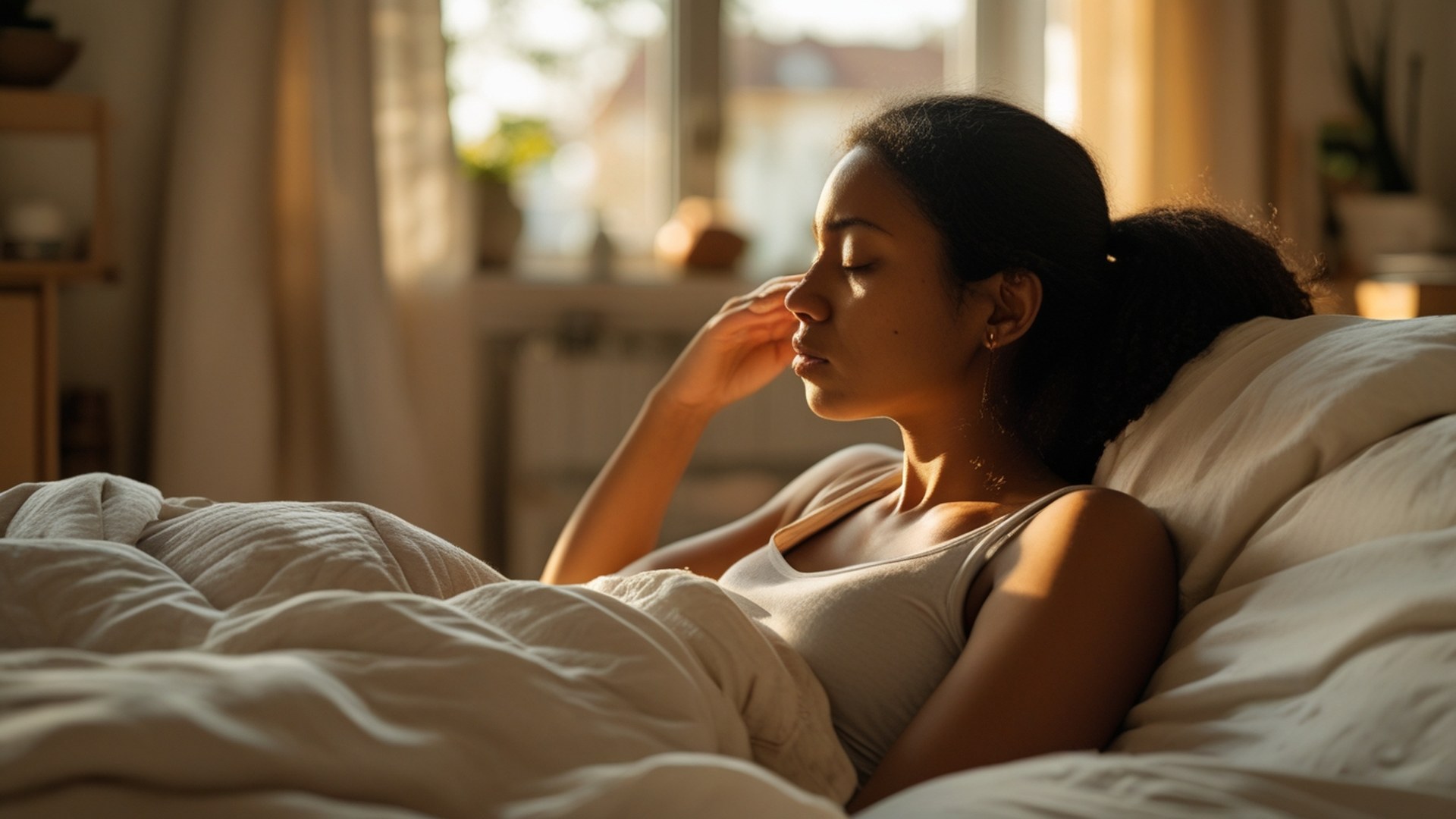
How to sleep better naturally is the question keeping millions awake at night. Most people think they're stuck with insomnia, but the truth is simpler: your body just needs the right signals to drift off. The good news is that you don't need pills, supplements, or expensive sleep gadgets to transform your sleep tonight.
Science shows that 35% of adults struggle with sleep quality, but 90% of them never try natural methods first. Your brain is literally programmed to sleep; you just need to stop fighting it. Small changes in your evening routine can shift everything.
This guide walks you through exactly how to fall asleep faster naturally, backed by neuroscience and real sleep research. You'll learn what actually works, why it works, and how to start tonight.
How to sleep better naturally involves regulating your circadian rhythm, reducing blue light exposure, managing body temperature, and creating a consistent bedtime routine. These science-backed methods help you fall asleep faster and wake up refreshed without medication.
What Is Sleep Quality and Why Does It Matter?
Sleep quality isn't just about the hours you spend in bed, it's about how deeply your brain and body recover during those hours. Poor sleep quality means waking frequently, tossing around, or feeling exhausted after 8 hours. Good sleep means moving smoothly through REM and deep sleep cycles where real restoration happens.
Research from the National Sleep Foundation shows that 45% of people with poor sleep quality report worse mental health, immune function, and metabolism. When you sleep poorly, your cortisol (stress hormone) stays elevated, making it harder to manage anxiety and stress the next day. This creates a vicious cycle where stress prevents sleep, and poor sleep increases stress.
Start tonight by tracking how you feel after sleep, not just counting hours. Notice if you're waking up groggy, needing 3 coffees to function, or feeling anxious by afternoon. These are signs your sleep quality needs improvement, not just more sleep.
- Sleep quality affects mood, immune health, metabolism, and focus the next day
- REM sleep repairs emotional health; deep sleep repairs physical recovery
- Most people prioritize sleep quantity but ignore sleep quality
- You can improve sleep quality in 1-2 weeks with simple habit changes
What Are the Signs You Have Poor Sleep Quality?
Poor sleep quality often looks different than simple insomnia. You might sleep 8 hours but feel like you never rested. This happens when your sleep cycles are broken by light, noise, racing thoughts, or hormonal shifts. The key is recognizing the signs early so you can fix the root cause.
Studies show that 60% of people with poor sleep quality don't realize it until they try one intervention and suddenly notice the difference. You might not notice you're waking up 15 times a night because you're not fully conscious. Your body registers the disruption, but your conscious mind doesn't remember it.
Pay attention to how you feel during the day, not just at night. Daytime symptoms are the real indicator of nighttime sleep quality. If you're irritable, unfocused, or craving sugar by 3pm, your sleep quality is probably suffering.
- Waking multiple times per night or very early in the morning
- Feeling unrefreshed even after 8+ hours of sleep
- Brain fog, difficulty concentrating, or memory problems during the day
- Increased anxiety, irritability, or emotional sensitivity
- Constant fatigue despite getting enough hours in bed
- Night sweats, restlessness, or difficulty staying asleep past 4am
Why Does Your Body Struggle to Fall Asleep Faster Naturally?
Your body has a built-in sleep system called the circadian rhythm, which is basically your internal clock. This clock responds to light, temperature, and routine. When you ignore these signals, your brain doesn't know when to produce melatonin (the sleep hormone), and you end up wired at 11pm even though you're exhausted.
Research from Harvard Medical School reveals that blue light from screens suppresses melatonin production by up to 50% when used within 2 hours of bedtime. Your ancestors fell asleep when the sun set; your brain is literally waiting for that signal. Instead, you're blasting it with artificial light and then wondering why sleep won't come.
The biggest mistake people make is trying to force sleep instead of inviting it naturally. Stress, racing thoughts, and fighting to fall asleep actually keeps your nervous system in "alert mode." You need to shift into parasympathetic mode (the calming nervous system state) first.
- Blue light from phones and screens blocks melatonin production
- Inconsistent sleep schedules confuse your circadian rhythm deeply
- Caffeine consumed after 2pm still affects sleep 8-10 hours later
- Stress and racing thoughts keep your nervous system in high alert
- Room temperature above 67F (19C) prevents deep sleep onset
- Eating large meals within 3 hours of bed disrupts sleep cycles
How to Sleep Better Naturally: 7 Proven Methods
The best approach to how to sleep better naturally combines multiple small changes that work together. Think of it like a recipe: one ingredient alone won't create the meal, but all of them together make magic. You don't need to implement all seven at once. Start with 2-3 that fit your life, then add more.
Sleep scientists have identified that the most effective sleep improvements come from addressing light, temperature, and routine together. People who change only one factor see 20% improvement; people who combine three factors see 70% improvement within 2 weeks. The compounding effect is real.
Choose the three methods that match your biggest challenges right now. If you're scrolling at 11pm, start with blue light blocking. If you're anxious, start with breathing. If you're waking at 4am, address room temperature and caffeine timing.
- Method 1: Control Light Exposure - Use blue light glasses after sunset, dim your home lights 2 hours before bed, and keep your bedroom completely dark (blackout curtains or eye mask). This signals your brain that nighttime has arrived.
- Method 2: Regulate Room Temperature - Keep your bedroom between 60-67F (15-19C). A cooler room is essential for deep sleep because your body needs to drop its core temperature to rest. Use a ceiling fan or crack the window.
- Method 3: Stick to a Consistent Sleep Schedule - Sleep and wake at the same time every single day, even weekends. This trains your circadian rhythm so your body naturally produces melatonin at the right time. It takes 3-4 weeks but the payoff is massive.
- Method 4: Create a Pre-Sleep Wind-Down Ritual - Spend 30-60 minutes before bed doing something calming: reading, journaling, stretching, or meditation. This signals to your body that it's time to transition into sleep mode.
- Method 5: Limit Caffeine After 2pm - Caffeine has a 5-6 hour half-life, meaning if you drink coffee at 3pm, half of it is still in your system at 9pm. This keeps your nervous system too alert to sleep deeply.
- Method 6: Use Breathwork to Activate Your Calming Nervous System - Try the 4-7-8 breathing technique: breathe in for 4 counts, hold for 7, exhale for 8. This activates your parasympathetic nervous system and tells your body it's safe to sleep.
- Method 7: Avoid Large Meals 3 Hours Before Bed - Digestion keeps your body in "working mode." If you're hungry, eat light protein and healthy fat (almonds, Greek yogurt) which won't spike blood sugar or prevent sleep.
How to Build a Daily Sleep Habit That Lasts?
Building a sleep habit is different from building other habits because your brain is naturally wired to seek sleep. The challenge isn't motivation, it's consistency and removing obstacles. The best sleep habit systems work because they align with your natural biology instead of fighting it.
Behavioral research shows that habits stick when they're tied to existing routines. If you already brush your teeth at 9pm, attach your wind-down ritual right after. If you already have morning coffee at 8am, that becomes your caffeine cutoff reminder. This is called habit stacking, and it's 3x more effective than trying to build an entirely new routine from scratch.
Focus on making the right choice automatic, not forced. Keep blue light glasses by your couch. Set your phone alarm for the same wake-up time every day. Pre-dim your lights with smart bulbs on a schedule. Remove friction from good choices and add friction to bad ones.
- Stack your sleep habit onto an existing routine (after brushing teeth, after dinner, etc.)
- Use your phone's Night Shift mode or blue light glasses starting 2 hours before bed
- Set a consistent alarm even on weekends to regulate circadian rhythm
- Create a sleep tracking note in your phone: how you fell asleep, how you woke up, how you felt
- Track for 2 weeks to see which changes make the biggest difference for you personally
- Add one new habit per week instead of changing everything at once
- Prepare your bedroom the night before: cool, dark, and clutter-free
The actual system for how to sleep better naturally becomes automatic after 3-4 weeks of consistency. Your brain will start expecting sleep at the right time. Your body will naturally cool down. Melatonin will flow on schedule. This is your biology working as it's supposed to.
What Does This Look Like in Real Life?
Sarah spent three years struggling with 2am wake-ups. She'd fall asleep fine around 10:30pm but jolt awake in the middle of the night with racing thoughts and couldn't fall back asleep until 5am. She'd gotten used to feeling exhausted all day, drinking four coffees just to function at work. She tried melatonin supplements, white noise machines, and sleeping pills, but nothing stuck. Her doctor said it was anxiety, but no one mentioned that her bedroom was 72F and she was drinking coffee until 4pm every afternoon.
When Sarah finally addressed the root causes (she lowered room temperature to 64F, stopped caffeine after 2pm, and started 4-7-8 breathing at 10:15pm), everything shifted within one week. Within 10 days, she was sleeping straight through until 6:30am and waking up naturally. Within three weeks, she didn't need the breathing technique anymore because her body had learned to wind down on its own. Now she wakes up refreshed before her alarm and hasn't touched melatonin in two months. She realized her problem was never that her body couldn't sleep, it was that she was working against her biology instead of with it.
Related Articles
Frequently Asked Questions
Where to Go From Here
You now have the exact science behind how to sleep better naturally and seven proven methods to start tonight. The most important thing to remember is that your body wants to sleep. You're not fighting biology, you're aligning with it. Every small change (dimming lights, lowering temperature, consistent timing) whispers to your nervous system that sleep is safe and welcome.
Start with one change today. If you scroll at night, put your phone in another room one hour before bed. If your room feels warm, crack a window or turn on a fan. If your schedule is all over the place, pick a realistic bedtime and stick to it. One change leads to another, and momentum builds quietly but powerfully.
Your future self, the one waking up naturally refreshed without an alarm screaming at you, is thanking you right now for taking this seriously. Sleep is not a luxury you earn by working harder. It's a foundation you build by making small, smart choices every single night.