Breathing Exercises For Anxiety Relief
I’ll be honest, I didn’t take breathing exercises seriously until I found myself sitting in my car before a work meeting, heart pounding, completely unable to calm down. That’s when I started actually researching breathing exercises for anxiety relief, and what I found genuinely surprised me. These aren’t just feel-good wellness trends, they’re backed by real science, they’re free, and you can use them anywhere without anyone even noticing. Whether you’re a grad student buried in deadlines or a professional navigating back-to-back meetings, learning to work with your breath can genuinely shift how your nervous system responds to stress. This guide breaks down the science, the techniques, and the practical steps to make it stick.
Why Your Breath Has So Much Power Over Anxiety
Most people treat breathing as something that just happens in the background. But here’s the thing, your breath is actually one of the only automatic body functions you can consciously control, and that gives you a direct line into your nervous system.
When anxiety hits, your sympathetic nervous system fires up the classic fight-or-flight response. Your heart rate climbs, your muscles tense, and your breathing becomes shallow and fast. Controlled breathing interrupts that cycle by activating the parasympathetic nervous system, the one responsible for rest and recovery. Think of it as flipping a biological off switch for stress.
The research backs this up. According to a 2023 study published in Cell Reports Medicine, just five minutes of cyclic sighing, a specific breathing pattern, significantly reduced anxiety and improved mood more effectively than mindfulness meditation alone. That’s a pretty compelling reason to give this a real shot.
The vagus nerve plays a big role here. Slow, deep exhalations stimulate the vagus nerve, which sends calming signals to your brain and heart. This is why even one or two long exhales can take the edge off during a stressful moment. You’re not imagining it, you’re working with your physiology.
The Most Effective Breathing Techniques to Try
There are dozens of breathing methods floating around wellness circles, but not all of them are equally useful for anxiety. Here are the ones that are both well-researched and genuinely practical for someone with a full schedule.
- Box Breathing (4-4-4-4): Inhale for 4 counts, hold for 4, exhale for 4, hold for 4. Used by Navy SEALs and ER nurses to stay calm under pressure. Works fast and requires zero equipment.
- 4-7-8 Breathing: Inhale for 4 counts, hold for 7, exhale slowly for 8. The long exhale is the key, it maximizes vagal activation. Great before bed or before a stressful event.
- Diaphragmatic Breathing: Also called belly breathing. You breathe deeply into your abdomen rather than your chest. It naturally slows your breath rate and reduces the shallow chest breathing that feeds anxiety.
- Cyclic Sighing: Take a normal inhale, then add a second short inhale through your nose to fully expand the lungs, then slowly exhale everything through your mouth. Repeat for a few minutes. This is the technique from the Cell Reports Medicine study mentioned above.
- Resonance Breathing (5-5): Inhale for 5 counts, exhale for 5 counts. This gets your heart rate variability into an optimal range and is often used in clinical settings for anxiety and depression.
You don’t need to master all five, that would be overwhelming. Pick one that feels natural and practice it consistently. Most people find box breathing or diaphragmatic breathing the easiest starting point, so that’s where I’d suggest beginning.
How to Practice Box Breathing: Step-by-Step
Box breathing is probably the most versatile technique in this list. It’s discreet enough to do during a meeting, structured enough to work when your mind is scattered, and simple enough that you’ll actually remember how to do it when anxiety shows up. Here’s how to do it properly.
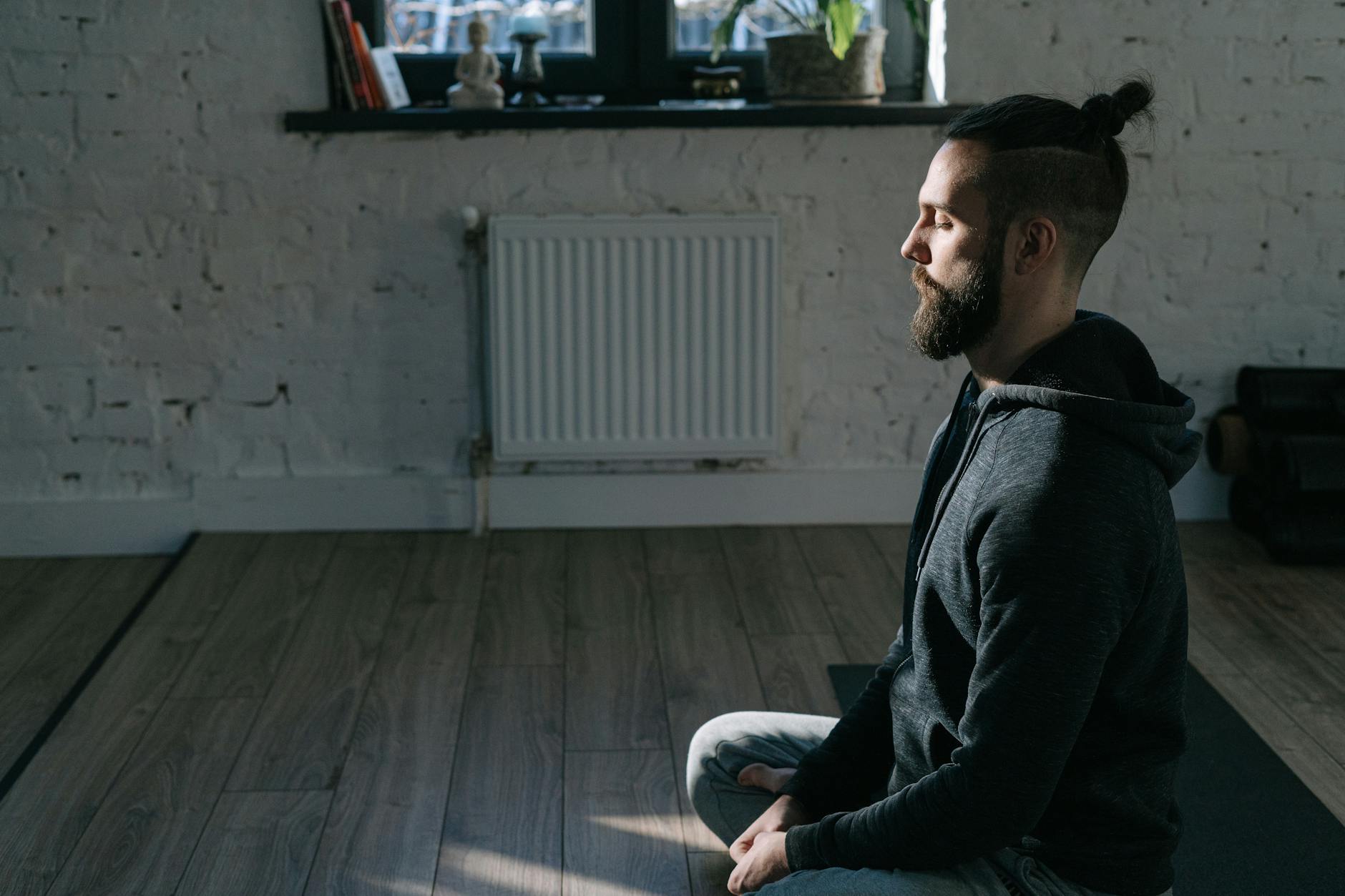
- Find a comfortable position. Sit upright in a chair or on the floor. You can also do this standing. Try to keep your spine relatively straight so your lungs have room to expand. Uncross your legs if you can.
- Exhale completely first. Before you start the box, let all the air out of your lungs. This clears the slate and helps you start with a fresh, full breath rather than stacking on top of held tension.
- Inhale slowly through your nose for 4 counts. Let your belly expand outward, not just your chest. Count at a pace that feels natural, roughly one count per second is a good benchmark. Don’t force or strain.
- Hold your breath for 4 counts. Keep your body relaxed during the hold. Don’t tense your shoulders or jaw. Think of this pause as a moment of stillness, not strain.
- Exhale slowly through your mouth for 4 counts. Let the air out gently and evenly. Some people find it helpful to slightly purse their lips, like you’re fogging a mirror, to control the pace of the exhale.
- Hold again at the bottom for 4 counts. This is the second pause, empty lungs, relaxed body. This is where a lot of the calming effect happens.
- Repeat for 4 to 6 cycles. One full round takes about 16 seconds. Four rounds takes about a minute. You should start to notice a physical shift, slower heart rate, looser shoulders, quieter mind, within those first few cycles.
- Return to normal breathing gradually. Don’t snap back to your usual pace. Let your breath transition naturally. Take a moment to notice how you feel before jumping back into whatever you were doing.
Building a Breathing Practice Into a Busy Life
The biggest reason people don’t stick with breathing exercises isn’t lack of interest, it’s lack of a routine. I know from experience that good intentions disappear fast when life gets hectic. Here’s how to actually make this a habit rather than something you vaguely remember during a crisis.
Attach it to something you already do. Morning coffee, your commute, the gap between meetings, these are natural anchors. Even two minutes of intentional breathing before you open your laptop in the morning can set a calmer tone for the whole day.
Use physical cues. Some people keep a small sticky note on their monitor that says “breathe”, cheesy, maybe, but effective. Others set a subtle phone reminder for mid-afternoon when stress tends to peak. The point is to make the behavior automatic rather than optional.
Don’t wait for a crisis to practice. Breathing exercises work best when they’re already part of your muscle memory. If the first time you try box breathing is in the middle of a panic attack, it’s going to feel awkward and hard to follow. Practice when you’re calm, so it’s available when you’re not.
- Start with just 2 minutes per day, that’s genuinely enough to build the habit.
- Log it in a habit tracker or journal if that motivates you.
- Be patient with yourself. Some days it’ll feel almost magical. Other days your mind will wander. Both are normal.
- Pair it with another wellness habit like a short walk or journaling if you want to amplify the effect.
When Breathing Alone Isn’t Enough
Breathing exercises are a powerful tool, but they’re not a substitute for professional support when anxiety is severe or persistent. Many of us have felt the difference between everyday stress and something that’s genuinely getting in the way of living our lives, and if your anxiety is significantly interfering with work, relationships, or daily functioning, that’s a signal to talk to a doctor or therapist. Techniques like cognitive behavioral therapy (CBT) combined with breathwork tend to produce the best outcomes for chronic anxiety.
Also worth noting: some people with certain respiratory conditions like COPD or severe asthma should check with a healthcare provider before starting extended breath-holding exercises. For most healthy adults, the techniques above are completely safe and well-tolerated.
Frequently Asked Questions
How quickly do breathing exercises for anxiety relief actually work?
Most people notice a physical shift within 60 to 90 seconds of starting a technique like box breathing or 4-7-8 breathing. The physiological response, slower heart rate, relaxed muscles, calmer mind, starts happening as soon as your exhale slows down and your vagus nerve gets the signal. For deeper, longer-lasting relief, consistent daily practice over a few weeks is where the real change happens.
Can I do these breathing exercises at work without anyone noticing?
Yes, easily. Box breathing and diaphragmatic breathing are completely invisible to anyone watching you. You can practice them at your desk, in a bathroom stall, in your car before walking into a building, or even during a video call if you keep your camera off. No props, no noise, no obvious body movements required. It genuinely looks like you’re just sitting there.
Is there a “best” breathing technique, or does it depend on the person?
It really does depend on the person and the situation. Box breathing tends to work well when you need to stay alert but calm, think before a presentation or a difficult conversation. The 4-7-8 method is better for winding down at night. Cyclic sighing is excellent for a quick reset mid-day. If you’re not sure where to start, try box breathing for one week and see how it feels. You can always experiment from there.
Final Thoughts
The bottom line is this, breathing is something you’re already doing thousands of times a day. The only shift here is doing it with intention, and that small adjustment can make an outsized difference in how you handle stress and anxiety. You don’t need a dedicated meditation room or a 30-minute window. You need two minutes, a little consistency, and some patience with yourself. Start with one technique, practice it when you’re calm, and trust that your nervous system knows exactly what to do with the signal you’re giving it. For more tools like this, explore the Mental Wellness section here on NicheHubPro.com.