
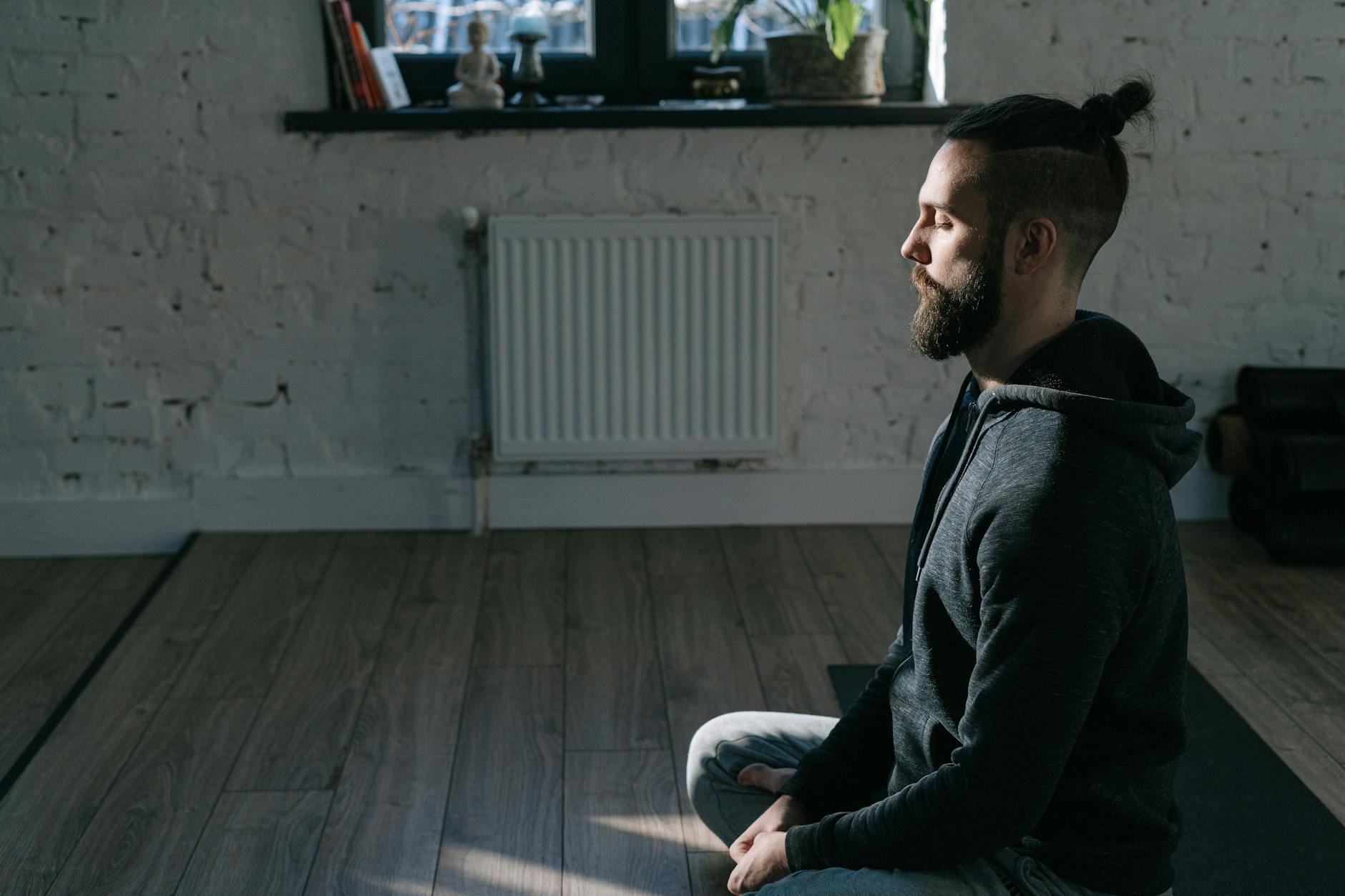
Grounding Techniques For Anxiety
If you’ve ever felt your thoughts spinning out of control before a big meeting or during a stressful study session, you already know how disorienting anxiety can feel. I’ve been there more times than I’d like to admit, heart racing, thoughts looping, completely unable to logic my way back to calm. Grounding techniques for anxiety are practical, in-the-moment tools that help you reconnect with the present when your mind starts racing toward worst-case scenarios. The good news? Most of them take under five minutes, require zero equipment, and can be done quietly at your desk without anyone noticing. This article walks you through the science, the methods, and how to actually build them into a real schedule, not just bookmark them and forget.
Why Your Brain Needs an Anchor
Anxiety hijacks your nervous system. When your brain perceives a threat, even a social one, like an email from your boss, it triggers the same fight-or-flight response that kept early humans alive. Stress hormones flood your body, your heart rate climbs, and your prefrontal cortex (the rational, decision-making part of your brain) goes partially offline. That’s why anxious thinking often feels circular and impossible to logic your way out of.
Grounding works by redirecting your attention to sensory or physical input happening right now. This activates the parasympathetic nervous system, your body’s built-in calm-down switch, and helps your prefrontal cortex come back online. According to a 2023 review published in Frontiers in Psychology, mindfulness-based grounding interventions significantly reduced acute anxiety symptoms in clinical and non-clinical populations, with effects noted in as little as one session. That’s not a small thing.
The Most Effective Grounding Techniques to Know
There’s no single technique that works universally for everyone, which is actually great news, it means you have options. Below are the methods most consistently supported by both research and real-world use. Try a few and notice which ones create that sense of “oh, I’m back” in your body.
- The 5-4-3-2-1 Method: Identify 5 things you can see, 4 you can touch, 3 you can hear, 2 you can smell, and 1 you can taste. This sensory scan pulls your attention out of your head and into your immediate environment.
- Box Breathing: Inhale for 4 counts, hold for 4, exhale for 4, hold for 4. This technique is used by Navy SEALs to manage stress under pressure, if it works in a combat scenario, it’ll handle your inbox.
- Cold Water Reset: Run cold water over your wrists or splash your face. The cold activates the mammalian dive reflex, which slows your heart rate almost immediately.
- Physical Object Focus: Pick up an object nearby, a pen, your phone case, a coffee mug, and describe it mentally in detail. Texture, temperature, weight, shape. This forces your brain to shift modes.
- Feet-on-the-Floor: Press your feet firmly into the ground. Notice the pressure, the temperature of the floor through your shoes. This is almost embarrassingly simple, but it’s effective precisely because it requires zero mental overhead.
- Mental Categorization: Pick a broad category, countries, foods, artists, cities you’ve visited, and name as many as you can. This engages your frontal lobe without requiring emotional processing.
How to Use the 5-4-3-2-1 Technique Step by Step
The 5-4-3-2-1 method is often the first grounding technique therapists teach because it’s structured, easy to remember, and works across a wide range of anxiety intensities. Here’s how to actually do it, not just in theory, but in the middle of a stressful moment at work or school.
- Pause and breathe first. Before you start scanning your senses, take one slow breath in through your nose and out through your mouth. This tiny reset signals to your nervous system that you’re shifting gears. Don’t skip this step, it primes the technique to work faster.
- Name 5 things you can see. Look around and call out five objects in your environment, either out loud (if you’re alone) or silently. Be specific: not just “a chair” but “a blue office chair with a cracked armrest.” Specificity keeps your brain engaged rather than letting it wander.
- Acknowledge 4 things you can physically feel. This could be the weight of your clothes on your shoulders, the chair beneath you, the temperature of the air, or the texture of the surface your hands are resting on. Again, be specific. The more sensory detail, the more effective.
- Identify 3 things you can hear. Close your eyes briefly if it helps. There might be distant traffic, an air vent humming, a keyboard clicking, or your own breathing. Name three distinct sounds without judging them as good or bad.
- Notice 2 things you can smell. This one trips people up because smell is subtle, but if you pay attention, there’s almost always something. Coffee, paper, your own skin lotion, the faint scent of the room. If you genuinely can’t detect anything, notice the neutral absence of smell.
- Identify 1 thing you can taste. A residual taste of your last drink or meal, the neutral moisture of your mouth, or a piece of gum if you have one. Sit with it for a moment before moving on.
After completing the full sequence, take another slow breath and check in with yourself. Most people report a noticeable reduction in the intensity of anxious thoughts, not that the stress disappears, but that the overwhelming quality of it softens enough to think more clearly. I know from experience that even one round can shift something. It won’t always feel dramatic, but it works.
Building Grounding Into Your Actual Day
Knowing these techniques is one thing. Using them when you’re already spiraling is another. The key is to practice grounding when you’re not anxious so that it becomes a familiar pathway when you are. Think of it the way athletes train the same movement patterns repeatedly so that in a game, the motion is automatic.
Here are a few realistic ways to make this stick without overhauling your routine:
- Attach a grounding practice to something you already do, like one minute of box breathing before your first coffee of the day.
- Set a low-key reminder on your phone for one mid-afternoon grounding check-in, not as a crisis intervention, but as maintenance.
- Keep a small textured object at your desk, a smooth stone, a stress ball, even a specific pen, that you associate with your grounding practice. Physical cues build habit faster than willpower alone.
- After any particularly stressful moment, do a quick 30-second version of the feet-on-the-floor technique before moving to the next task. This prevents anxiety from compounding across your day.
When Grounding Is and Isn’t Enough
Grounding techniques are genuinely powerful for managing situational anxiety, the kind that spikes before a presentation, during a difficult conversation, or when you’re overwhelmed by a packed schedule. They are not a replacement for professional support if anxiety is persistent, affecting your sleep, relationships, or ability to function, or if you’re experiencing panic disorder or trauma-related symptoms.
Think of grounding as a first-aid kit, not a long-term treatment plan. It stops the bleeding in the moment. But if the wound keeps reopening, it’s worth talking to a therapist who works with evidence-based approaches like Cognitive Behavioral Therapy (CBT) or Somatic Experiencing, both of which build on the same underlying principles as grounding. Many of us wait far too long to ask for that kind of support, and you don’t have to.
Frequently Asked Questions
How quickly do grounding techniques actually work?
Most people feel a noticeable shift within 2 to 5 minutes of completing a grounding exercise. The physiological effects, slower heart rate, reduced muscle tension, can begin within 60 to 90 seconds of activating the parasympathetic nervous system, particularly through breathing-based techniques. Consistency over time also tends to reduce the baseline intensity of anxiety, not just the acute spikes.
Can I use grounding techniques during a panic attack?
Yes, though it requires practice. During a full panic attack, your rational brain is working with limited resources, so complex techniques can feel impossible. Simpler options, like pressing your feet into the floor, holding something cold, or focusing on a single repeated breath, are more accessible in that state. The more you practice these techniques when you’re calm, the more available they become during intense moments.
Are grounding techniques the same as mindfulness?
They overlap but aren’t identical. Mindfulness is a broader practice of non-judgmental present-moment awareness, it’s a way of relating to your experience over time. Grounding techniques are a specific subset of mindfulness tools, focused on rapidly reorienting your attention to physical or sensory experience when anxiety spikes. You can use grounding without a formal mindfulness practice, though the two work very well together.
Final Thoughts
Grounding techniques for anxiety aren’t magic, and they won’t eliminate stress from your life, but they give you something more practical: a way to stay functional when your nervous system is working against you. The techniques in this article are all backed by real research, require no special equipment, and take minutes rather than hours. Start with one method that feels manageable, practice it a few times when you’re relatively calm, and notice how much more accessible it becomes when you actually need it. That’s the whole strategy, simple, repeatable, and genuinely useful.