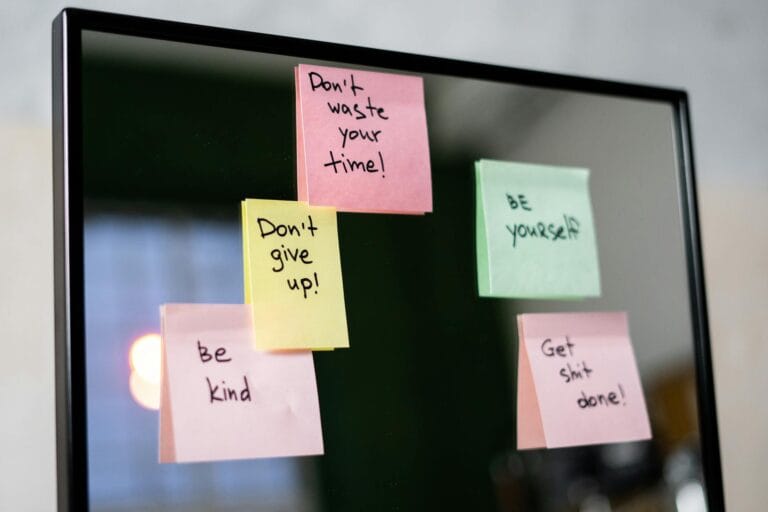

How To Build A Positive Mindset
If you’ve been searching for practical advice on how to build a positive mindset, you’re probably past the stage of wanting vague inspiration. You want something that actually works when your inbox is overflowing, your deadlines are stacking up, and the last thing you feel is optimistic. The good news is that a positive mindset isn’t a personality trait you either have or don’t have. It’s a skill, and like any skill, it improves with the right kind of practice.
What a positive mindset actually means
A lot of people confuse a positive mindset with toxic positivity, the pressure to be cheerful all the time and pretend problems don’t exist. That’s not what this is about. A genuine positive mindset means you believe that your actions can influence outcomes, that setbacks are temporary and informative rather than permanent and defining, and that you’re capable of learning your way through hard situations.
Psychologists call part of this “growth mindset,” a term popularized by Stanford researcher Carol Dweck. Her research showed that people who believe their abilities are developable through effort outperform those who see their abilities as fixed, not just in school, but in workplaces and high-stress environments too. That finding has been replicated across dozens of settings since Dweck first published it in 2006.
The reason this matters for busy professionals and students isn’t motivational, it’s practical. How you interpret a failure determines whether you extract useful information from it or just carry it as dead weight. A positive mindset, in the real sense, is a more efficient way to process your life.
Why your current thought patterns feel so automatic
Your brain has a negativity bias. This isn’t a flaw, it’s an evolutionary feature. For most of human history, paying close attention to threats kept people alive. A brain that remembered the one time a bush rustled and a predator appeared was more useful than one that moved on quickly. The problem is that this same wiring now makes you replay a critical comment from your manager on loop while barely registering the five things that went well that day.
According to a 2020 study published in Nature Human Behaviour, negative emotional experiences have roughly twice the psychological weight of positive ones of equal intensity. This isn’t a character flaw, it’s a default setting. And like most defaults, it can be adjusted.
Understanding this matters because it lowers the bar. You don’t need to be naturally optimistic. You just need to consciously balance the scales a little, because your brain is already tipping them in one direction on its own.
How to build a positive mindset: a practical step-by-step approach
These steps work best when you layer them over time rather than trying to do everything at once. Start with step one and add the others as each becomes a natural part of your routine.
- Audit your mental inputs. Before adding anything new, look at what you’re already consuming. Social media feeds, news cycles, and even certain conversations are calibrated to trigger anxiety and comparison. You don’t have to eliminate them, but tracking how you feel before and after specific inputs for one week gives you real data about what’s pulling your baseline mood downward.
- Practice specific gratitude, not general gratitude. Journaling “I’m grateful for my health and family” every day stops working quickly because it becomes automatic. Instead, write one specific thing each morning, something that happened in the last 24 hours. “The meeting I was dreading ended in 20 minutes” is more psychologically potent than “I’m grateful for good things.” Specificity keeps the practice honest and effective.
- Reframe setbacks using a structured question. When something goes wrong, ask yourself: “What did this show me, and what’s one thing I’d do differently?” This isn’t about forced positivity. It’s about extracting information instead of just accumulating stress. Over time, this question becomes a reflex that shortens recovery time after failures or criticism.
- Protect your first and last 30 minutes of the day. The mental state you start and end the day in has a disproportionate effect on your overall mood and resilience. Checking your phone first thing in the morning hands your attention over to other people’s agendas immediately. Even 15 minutes of intentional activity, reading, stretching, planning your day, before opening apps makes a measurable difference in how reactive or grounded you feel.
- Build in small, reliable wins. Confidence in your own ability to handle hard things doesn’t come from thinking positive thoughts about yourself. It comes from evidence. Set small, specific tasks each day that you can actually complete, and complete them. A to-do list of five realistic items that you finish builds more genuine self-trust than one ambitious item you procrastinate on all week.
The role your environment plays
Personal habits matter, but your environment either supports or fights them. Research in behavioral science is clear that people overestimate their willpower and underestimate how much their surroundings shape their choices. If your workspace is cluttered, your phone is always within reach, and every break involves scrolling through content designed to be addictive, you’re working against yourself at the system level.
Small environmental changes can do a lot of the heavy lifting:
- Keep your journal or a book on your desk rather than your phone
- Use app timers or grayscale mode to reduce the pull of social media
- Spend time around people who have the kind of outlook you want, not because attitudes are magical, but because the conversations you have regularly shape what you notice and expect
- Create a physical signal for the end of your workday, like closing your laptop and making tea, so your brain gets a clear boundary between work mode and recovery mode
When it’s not about mindset
This is worth saying directly: if you’re experiencing persistent low mood, exhaustion, or hopelessness that doesn’t lift, the answer isn’t more gratitude journaling. Those symptoms may point to depression, burnout, or anxiety that benefit from professional support. Building a positive mindset is a useful tool for resilience and everyday mental hygiene. It isn’t a treatment for clinical mental health conditions, and treating it like one can delay getting actual help.
If your low mood has lasted more than two weeks and is affecting your ability to work or sleep, talking to a doctor or therapist is the practical next step, not the last resort.
How long does this actually take
The honest answer is: it depends on how consistently you practice and what you’re starting from. Neuroscientific research on neuroplasticity shows that the brain does form new patterns with repeated experience, but “rewiring” isn’t a weekend project. Most people who make these practices a genuine daily habit report noticing a shift in their default reactions within six to twelve weeks. Not a personality transplant, a measurable change in how quickly they recover from stress and how often they catastrophize.
That timeline is realistic and worth committing to. It’s also useful to track it. Keep a simple weekly note on your phone rating your average mood and resilience from one to ten. After eight weeks, most people are surprised by how much the numbers have shifted.
Frequently Asked Questions
Can you really change your mindset, or is it mostly personality?
Research consistently shows that mindset is far more malleable than personality. Personality traits like introversion or sensitivity are relatively stable, but how you interpret events, setbacks, and your own abilities is shaped heavily by habit and experience. Studies on cognitive behavioral therapy, for example, show measurable changes in thought patterns within 8 to 16 weeks of consistent practice.
Is positive thinking the same as ignoring problems?
No, and conflating the two is one of the biggest misconceptions around this topic. A positive mindset means you believe problems are solvable and that your effort matters, not that you pretend problems don’t exist. Research actually shows that people with a growth-oriented mindset engage more directly with challenges rather than avoiding them, because they’re less afraid that failure defines them.
What if I try these steps and still feel stuck?
That’s normal, and it doesn’t mean the practices don’t work, it usually means one of a few things: you’re applying them inconsistently, something in your environment is actively working against your efforts, or there’s an underlying issue (sleep deprivation, chronic stress, or a mental health condition) that these tools can’t address on their own. Tracking your habits honestly for two weeks usually reveals where the gap is.
Final thoughts
Building a positive mindset is less about changing who you are and more about changing what you practice. The brain responds to what you repeatedly do, and the steps here, auditing inputs, practicing specific gratitude, reframing setbacks, protecting key parts of your day, and collecting small wins, are all things you can start this week with no equipment and no special conditions. If you want one concrete starting point, try the specific gratitude practice for seven days straight and rate your mood each evening on a scale of one to ten. By day seven, you’ll have your own data to work with.