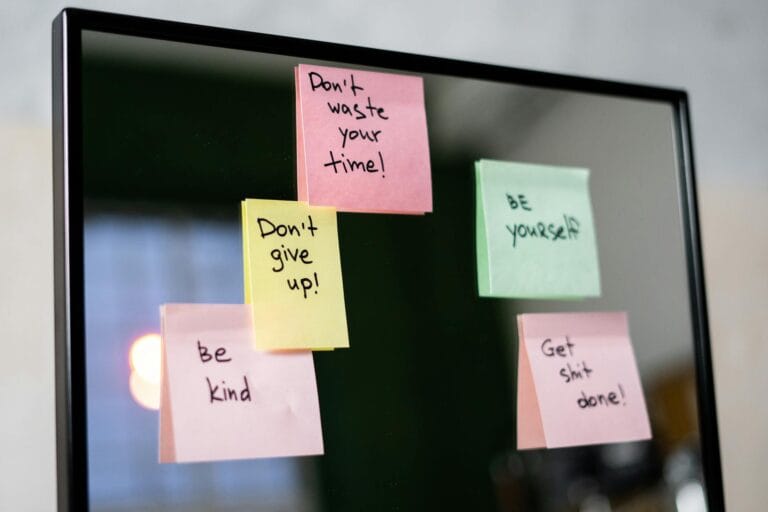

How To Build Emotional Resilience
If you’ve been wondering how to build emotional resilience, you’re already ahead of most people — because recognizing the need is the first step toward actually doing it. Emotional resilience isn’t some personality trait you’re either born with or not. It’s a skill, and like most skills, it gets stronger with practice. For professionals and students juggling deadlines, relationships, and the occasional crisis, developing this capacity can be the difference between recovering from a hard week and being leveled by it.
What emotional resilience actually means
Resilience gets misused a lot. It doesn’t mean you never feel stressed, hurt, or overwhelmed. It means you process those feelings without getting stuck in them for too long. Think of it less like armor and more like a muscle. You’re not trying to stop taking hits — you’re training yourself to recover faster after you do.
Psychologists generally define emotional resilience as the ability to adapt to stress, adversity, or significant sources of change. It pulls on several mental capacities at once: self-awareness, emotional regulation, optimism that’s grounded in reality, and the ability to ask for support when you need it. None of those come automatically — all of them can be developed.
Why this matters more than people realize
According to a 2023 report by the American Psychological Association, 76% of adults in the United States reported experiencing at least one symptom of stress-related burnout in the previous month, including physical fatigue, emotional exhaustion, or difficulty concentrating. That number has held stubbornly high since 2020, suggesting that simply “managing” stress isn’t working for most people. Building actual resilience is a longer-term answer.
Low emotional resilience tends to create a feedback loop. You get stressed, you cope badly, the coping itself (doom scrolling, skipping sleep, isolating) makes your stress response worse, and then the next difficult thing hits you harder than it should have. Over time this compounds. Stronger resilience breaks that loop before it starts.
How to build emotional resilience: a step-by-step approach
These steps are listed in a practical order, but you don’t have to follow them sequentially. Start where you feel the most friction — that’s usually where the most useful work is.
- Name your emotional state with precision. Most people stop at “I’m stressed” or “I’m upset.” Research by neuroscientist Lisa Feldman Barrett shows that emotionally granular labeling — distinguishing between feeling frustrated, humiliated, anxious, or disappointed — activates the prefrontal cortex and lowers your amygdala’s alarm response. Start keeping a brief daily log: what happened, what you felt, and what you did with it. Even three sentences a day builds enormous self-awareness over time.
- Build a recovery routine, not just a coping routine. Coping means surviving the moment. Recovery means restoring your baseline afterward. These are different things. A coping strategy might be breathing exercises during a stressful meeting. A recovery routine might be a 20-minute walk after work, a consistent sleep schedule, or a weekly check-in call with someone you trust. Both matter, but most people only focus on the first. Write down what actually restores you — not what seems like it should — and protect that time.
- Practice reappraisal, not just positive thinking. Cognitive reappraisal is a technique backed by decades of research in cognitive behavioral therapy. It doesn’t mean forcing optimism. It means deliberately reconsidering the meaning of a stressful event. If a presentation goes badly, reappraisal isn’t “it was fine.” It’s asking: what did I learn, what can I control going forward, and is this situation actually as threatening to my long-term goals as it feels right now? The goal is accuracy, not cheerfulness.
- Invest in relationships before you need them. Social connection is one of the strongest predictors of resilience. A 2021 review published in the journal Frontiers in Psychology found that perceived social support consistently buffered against the psychological impact of stressful life events. The key word is “perceived.” It’s not just about having people around — it’s about feeling genuinely connected to them. That means nurturing relationships during calm periods, not only reaching out when things are bad.
- Expose yourself to manageable difficulty on purpose. This sounds counterintuitive, but voluntary challenge — hard workouts, learning an uncomfortable skill, sitting with a difficult conversation rather than avoiding it — trains your stress response system to be more efficient. Psychologists call this “stress inoculation.” The idea is that tolerable doses of difficulty, handled well, build confidence in your ability to handle more. Pick one area of your life where you’ve been avoiding something hard and engage with it deliberately.
- Get consistent about sleep, movement, and nutrition. These aren’t exciting suggestions, but they’re non-negotiable. Emotional regulation is partly a biology problem. Sleep deprivation impairs the prefrontal cortex — exactly the part of your brain you need for rational perspective during stress. Regular physical movement reduces baseline cortisol. Stable blood sugar reduces mood volatility. You can’t build psychological resilience while running your body into the ground. This isn’t a soft recommendation — it’s a structural one.
Common mistakes that slow your progress
A few patterns tend to undermine people even when they’re genuinely trying to become more resilient.
- Mistaking suppression for regulation. Pushing feelings down isn’t the same as processing them. Suppression tends to increase physiological stress even when it reduces visible emotional expression.
- Waiting for a crisis to start working on this. Resilience built during calm periods is far more available to you under pressure than skills learned in the middle of a breakdown.
- Treating resilience as a solo project. The research is consistent: isolation undermines resilience. People who actively maintain social connections recover faster from adversity across nearly every measure studied.
- Expecting linear progress. You’ll have weeks where you handle everything well and weeks where you fall apart over small things. That variability is normal and doesn’t mean the work isn’t working.
Small habits that compound over time
You don’t need a complete lifestyle overhaul. Some of the most consistent gains in emotional resilience come from small daily practices that slowly rewire your defaults.
- Spend two minutes at the end of each day identifying one thing that went well and one thing you’d handle differently next time. This builds both gratitude and reflective capacity without turning into toxic positivity.
- Practice pausing before responding in high-emotion conversations. A literal five-second pause reduces reactive behavior significantly and gives your prefrontal cortex time to catch up with your amygdala.
- Use “and” instead of “but” when describing mixed feelings. “I’m exhausted and I know I can get through this” holds both truths at once. It sounds minor, but language shapes how we experience our inner state.
- Set a weekly check-in with yourself — ten minutes with a journal or just quiet reflection — to notice patterns in what’s depleting you and what’s sustaining you.
Frequently Asked Questions
Is emotional resilience the same as not showing emotion?
No. Emotional resilience has nothing to do with suppressing feelings or appearing unaffected. People with high resilience often feel emotions just as intensely — they’re simply better at processing those emotions without being derailed by them for extended periods. Stoicism as a performance is actually associated with worse long-term mental health outcomes in most clinical research.
How long does it take to build emotional resilience?
There’s no fixed timeline, but studies using mindfulness-based stress reduction programs show measurable changes in emotional regulation within eight weeks of consistent practice. That said, resilience building isn’t a course with a graduation date. It’s an ongoing process. Most people notice meaningful shifts in three to six months if they’re actively practicing, not just reading about it.
Can therapy help with emotional resilience?
Yes, significantly. Cognitive behavioral therapy (CBT) and dialectical behavior therapy (DBT) both have strong evidence bases for improving emotional regulation and resilience. Therapy isn’t just for crisis situations — it’s a legitimate tool for building skills during stable periods. If access or cost is a barrier, there are structured workbooks based on CBT and DBT principles that produce real results when used consistently.
Final Thoughts
Building emotional resilience is practical work, not self-help theater. It involves training specific skills — emotional labeling, reappraisal, recovery habits, social investment, and voluntary challenge — and doing that training consistently enough that these responses become default rather than deliberate. The research is clear that this capacity can change at any point in your life. Start with one step from the list above, track how it goes for two weeks, then add another. The American Psychological Association’s 2023 stress report notes that people who use active coping strategies report 40% lower stress-related burnout than those who rely on passive or avoidance-based coping — which means the specific actions you take matter more than your starting point.