
How To Focus Better When Working From Home
If you’ve been searching for real answers on how to focus better when working from home, you’re not alone, and you’re definitely not broken. I’ve been there too, staring at my laptop while the laundry pile judges me from across the room. Working remotely sounds like a dream until your couch becomes your office, your kitchen becomes a constant distraction, and your brain refuses to cooperate past 11 a.m. The good news? Focus is a skill you can actually train, not a personality trait you either have or don’t. This guide breaks down practical, science-backed strategies that fit into a real life, not a productivity influencer’s highlight reel.
Why Working From Home Wrecks Your Focus (It’s Not Just Laziness)
Before jumping into fixes, it helps to understand what’s actually happening in your brain. When you work in a traditional office, the environment itself acts as a focus trigger. The commute, the desk, the colleagues, all of it signals to your brain: “We’re in work mode now.” At home, those signals disappear. Your brain struggles to separate rest space from work space, which creates what psychologists call context collapse, when your mind can’t figure out which “mode” to be in.
Add to that the constant accessibility of your phone, streaming services, snacks, and family members, and you’ve got a recipe for fragmented attention. According to a study published by Microsoft Research, it takes an average of 23 minutes to fully regain deep focus after an interruption. Multiply that by the number of times your phone buzzes or someone calls your name in a day, and you can see why so many remote workers feel mentally exhausted by early afternoon despite not feeling very productive. Many of us have felt that strange mix of tired and unaccomplished, and it makes total sense when you look at it this way.
The solution isn’t willpower. It’s designing your environment and your habits so that focus becomes the path of least resistance.
Build a Work Environment That Does Half the Work for You
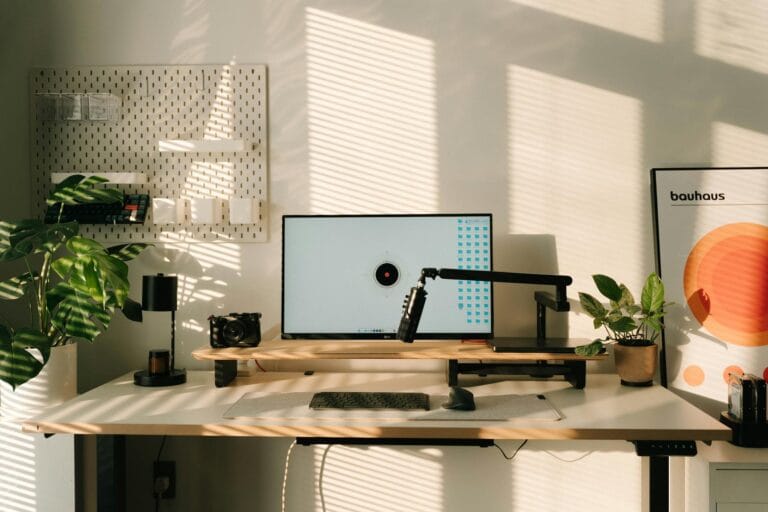
Your physical space sends powerful signals to your nervous system. You don’t need a dedicated home office, even a specific chair, a particular corner of a room, or a consistent desk setup can train your brain to shift into work mode. The key is consistency. Use that space only for work, and over time your brain will start to associate it with focused effort.
- Eliminate visual clutter: A messy desk increases cognitive load. Keep only what you need for the current task in front of you.
- Control your lighting: Natural light improves alertness and mood. Position your workspace near a window if possible, or invest in a daylight lamp.
- Use sound intentionally: Some people focus better with background noise (lo-fi music, white noise, coffee shop ambiance), while others need silence. Experiment and commit to what actually works for you.
- Keep your phone in another room: Not face-down on your desk, in another room. Research consistently shows that the mere presence of a smartphone reduces available cognitive capacity, even when it’s off.
- Signal the start of work: Make a small ritual, brew a specific tea, put on headphones, take a short walk, that your brain learns to associate with starting focused work.
How to Structure Your Day for Maximum Mental Energy
One of the biggest remote work mistakes is treating every hour of the day as equally usable for deep work. They’re not. Most people have a natural peak focus window of two to four hours, typically in the morning. The rest of the day is better suited for emails, administrative tasks, calls, and lighter work.
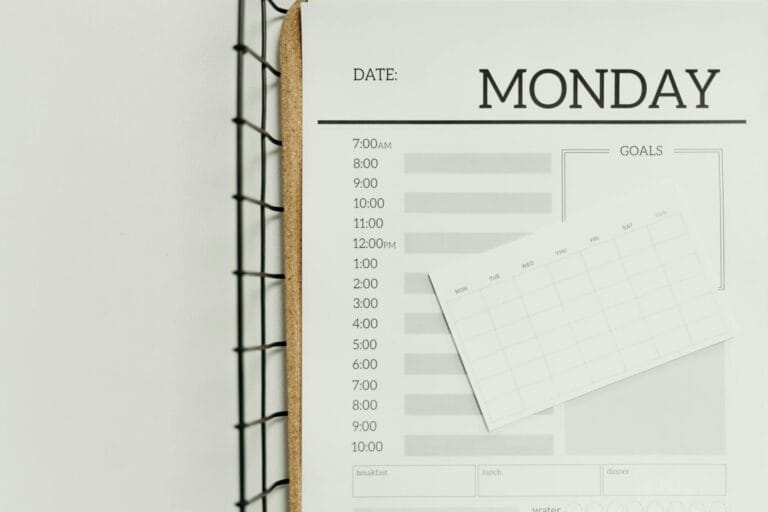
Time-blocking is one of the most effective tools for this. Instead of working from a to-do list (which creates decision fatigue), you assign specific types of work to specific time slots. Your calendar becomes your boss, a surprisingly relieving feeling when you’re used to juggling competing priorities all day.
Here’s a simple time-blocking structure that works well for remote professionals:
- Morning block (first 2-3 hours): Deep, focused work, writing, coding, strategizing, anything that requires sustained mental effort.
- Mid-morning buffer: Emails, messages, quick admin tasks.
- Midday reset: Lunch away from your screen, a short walk, or a 10-minute rest.
- Afternoon block: Meetings, collaborative tasks, creative brainstorming, lighter focused work.
- End-of-day shutdown ritual: Write tomorrow’s top three priorities, close all tabs, and physically step away from your workspace.
A Step-by-Step Method to Reset Your Focus When You’re Scattered
Even with the best setup and schedule, there will be days when your brain just won’t cooperate. I know from experience that pushing through those foggy stretches rarely works, you just end up wasting an extra hour feeling guilty about not working. Here’s a reliable reset process you can use anytime you notice yourself spinning, procrastinating, or feeling mentally foggy.
- Stop and notice: Acknowledge that you’re unfocused without judgment. Trying to push through distraction usually makes it worse. Just name it, “I’m scattered right now.”
- Step away for five minutes: Walk to another room, step outside, or do a few minutes of light stretching. Physical movement increases blood flow to the prefrontal cortex, the part of your brain responsible for focus and decision-making.
- Hydrate: Even mild dehydration impairs cognitive performance. Drink a full glass of water before returning to work.
- Clear your desktop: Close every browser tab and application that isn’t related to your current task. Open only what you need.
- Write one sentence: Before you start working again, write out exactly what you’re going to do for the next 25 minutes. Specificity reduces resistance. “Work on report” is vague. “Write the introduction section of the Q3 report” is actionable.
- Set a timer for 25 minutes: Use the Pomodoro technique, work in focused 25-minute sprints, followed by a 5-minute break. This removes the psychological weight of “working all day” and makes starting feel much less daunting.
- Reward completion: After a successful focused block, give yourself something small, a good coffee, a few minutes of a podcast, a short stretch. This trains your brain to associate focused work with positive outcomes.
The Role of Breaks, Sleep, and Your Body in Staying Focused
No amount of productivity hacks will compensate for a chronically sleep-deprived, sedentary, or stressed nervous system. Your brain is biological hardware, and it needs maintenance. Full stop.
Breaks aren’t the enemy of productivity, they’re a requirement for it. The research on ultradian rhythms (90-minute cycles of high and low mental alertness) suggests your brain naturally needs a rest period after every 90 minutes of intense focus. Ignoring these natural rest signals leads to diminishing returns and mental fatigue that builds over days and weeks.
- Move your body daily: Even a 20-minute walk improves focus, mood, and memory. You don’t need a gym routine, you just need to not sit for eight hours straight.
- Protect your sleep: Seven to nine hours isn’t a luxury, it’s when your brain consolidates learning and clears metabolic waste. Cutting sleep to work more is almost always counterproductive.
- Manage stress actively: Chronic stress floods your system with cortisol, which directly impairs the prefrontal cortex. Regular breathing exercises, time outdoors, or even journaling for five minutes can meaningfully reduce cognitive load.
- Eat to think: Heavy, processed meals crash your energy. Lighter, protein-rich meals and steady hydration keep your blood sugar stable and your concentration consistent.
Digital Habits That Quietly Destroy Your Concentration
Your devices are designed by teams of brilliant engineers specifically to capture and hold your attention. That’s not a conspiracy theory, it’s a business model. Understanding this makes it easier to set deliberate boundaries rather than feeling personally weak every time you get sucked into a scroll.
- Turn off all non-essential notifications: Every ping is a micro-interruption. Batch your communication checks to two or three specific times per day.
- Use website blockers during focus sessions: Tools like Freedom, Cold Turkey, or even your phone’s built-in screen time controls remove the temptation entirely so you don’t have to rely on willpower.
- Stop multitasking: The brain doesn’t actually multitask, it rapidly switches between tasks, and each switch carries a cognitive cost. Singletasking is dramatically more efficient.
- Create a “capture list”: When random thoughts or tasks pop into your head mid-focus (and they will), write them down immediately on a notepad or app and return to your work. This satisfies your brain’s need to “not forget” without derailing your concentration.
Frequently Asked Questions
How long does it take to build better focus habits when working from home?
Most people notice meaningful improvement within two to three weeks of consistent practice. The key word is consistent, habits form through repetition, not intensity. Start with one or two changes rather than overhauling your entire routine at once. Small wins build momentum.
Is it normal to feel less focused working from home than in an office?
Completely normal. Offices are designed with environmental cues that support work behavior. At home, you have to deliberately create those cues yourself. It takes intentional effort at first, but over time your designed environment and routines will do that work automatically.
What if I live with others and can’t control my environment?
Communicate your focus windows clearly with the people you live with, treat your work blocks like meetings that can’t be interrupted. Noise-canceling headphones are a game-changer in shared spaces. You can also shift your deep work to early mornings or evenings if your household is quieter during those times. Flexibility plus boundaries is the combination that works.
Final Thoughts
The bottom line is that learning how to focus better when working from home isn’t about becoming a different person or achieving some monk-like level of discipline. It’s about removing friction, designing smarter defaults, and working with your brain instead of against it. Start small, pick one strategy from this article and practice it this week. Whether it’s a five-minute reset ritual, a time-blocking experiment, or simply putting your phone in another room, one consistent change is worth more than ten things you try once and abandon. You’ve got this.
Related Articles
- Digital Minimalism For Better Focus
- How To Fix Your Posture Working From Home
- Batching Tasks To Save Time