
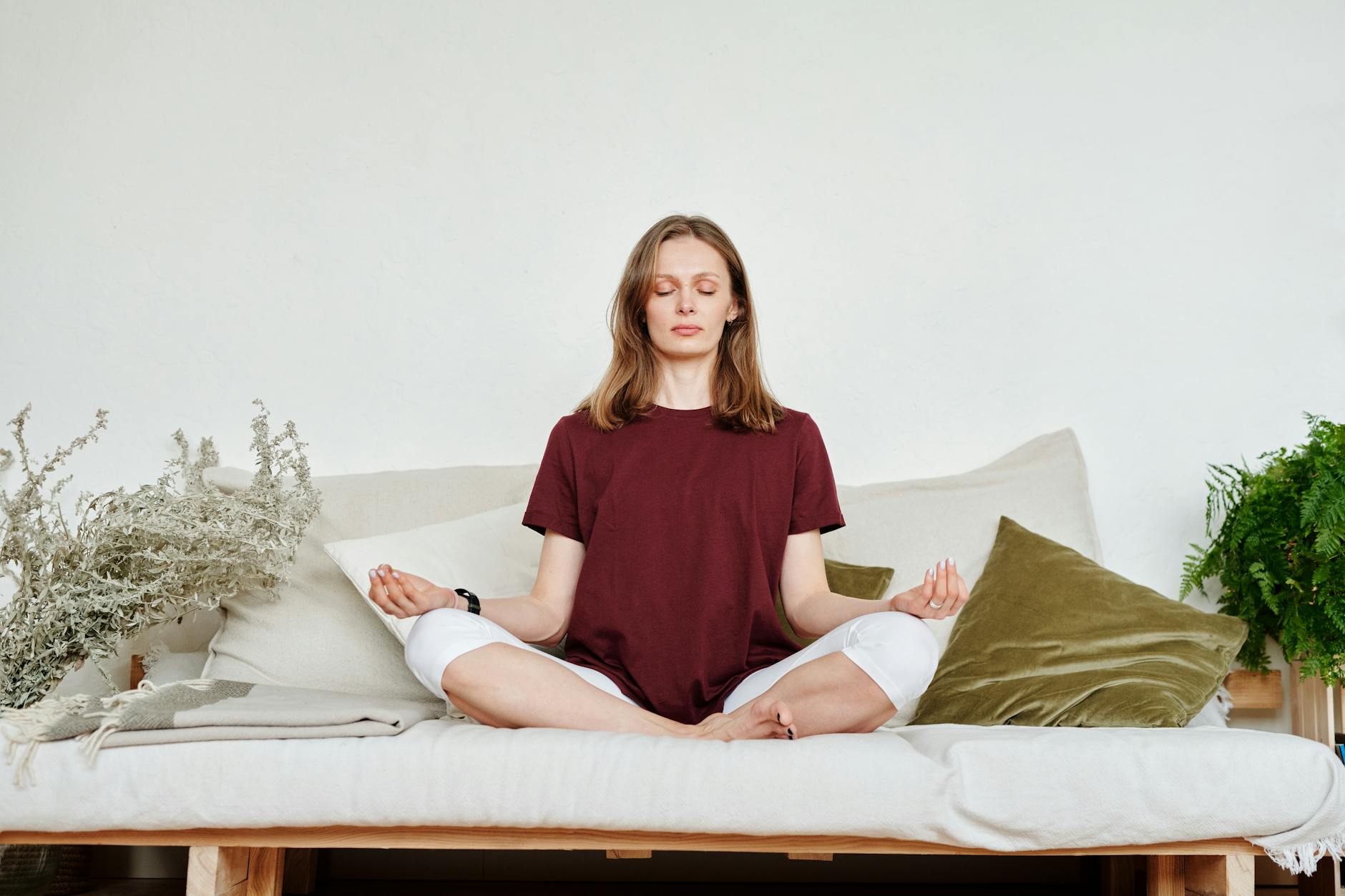
How To Meditate When You Cant Sit Still
If you’ve ever tried to meditate and spent the whole time mentally drafting your grocery list, you are absolutely not alone. I’ve been there more times than I’d like to admit, sitting on a cushion, eyes closed, convinced I was the one person on earth who simply couldn’t do this. But here’s what I wish someone had told me sooner: if you’re searching for how to meditate when you can’t sit still, the problem isn’t you. Millions of busy professionals quietly abandon meditation before it has a chance to work, simply because the traditional format doesn’t fit their brain or their lifestyle. The good news? Stillness is not actually a prerequisite for meditation. Science has caught up with what many practitioners have known for centuries: movement and mindfulness are not opposites.
Why Sitting Still Feels Impossible (And Why That’s Okay)
Before we get into solutions, it helps to understand what’s actually happening in your body when you try to sit quietly and everything in you resists. For many people, especially those with high-stress jobs or undiagnosed ADHD tendencies, the nervous system is running in a near-constant state of activation. Asking it to suddenly go quiet is a bit like slamming the brakes at highway speed. The friction is real, and it makes complete sense.
According to a 2021 survey by the American Psychological Association, 79% of adults report experiencing significant stress at work on a regular basis. When your baseline is already elevated, traditional seated meditation can feel like yet another task you’re failing at. That interpretation alone creates more anxiety, not less. Understanding this cycle is the first step toward breaking it.
The truth is, meditation is about directing attention, not eliminating movement. Your brain doesn’t care whether you’re sitting, walking, or washing dishes. What it responds to is the quality of your awareness in that moment. Once you release the idea that meditation has one correct posture, an entire world of accessible practice opens up.
Types of Meditation That Work for Restless People
There are several well-researched approaches specifically suited to people who struggle with stillness. And I want to be clear, these aren’t watered-down versions of “real” meditation. They’re legitimate, evidence-based practices used in clinical settings, athletic training, and corporate wellness programs worldwide.
- Walking Meditation: Rooted in Buddhist Vipassana tradition and now widely studied in Western psychology, walking meditation involves synchronizing your attention with each step, noticing the lift, the movement, the placement of each foot. It requires no special environment. A hallway, a parking lot, or a park all work equally well.
- Body Scan Meditation: Done lying down or even in a reclined chair, this practice involves slowly moving attention through different parts of the body. It’s particularly effective for people whose restlessness is really just physical tension masquerading as mental noise.
- Breathwork with Movement: Combining controlled breathing with gentle repetitive movement, like rocking slightly or tapping fingers in rhythm, gives the nervous system a physical anchor without requiring full stillness. This is sometimes called somatic meditation.
- Mindful Exercise: Yoga, tai chi, and even rhythmic strength training can function as moving meditation when performed with deliberate attention. The key variable is intention, not the activity itself.
- Eyes-Open Awareness Practice: Many restless meditators do better with eyes slightly open rather than closed. Closing your eyes can amplify internal noise. A soft downward gaze at a fixed point gives the visual system just enough input to stay grounded.
How to Build a Realistic Meditation Habit When You’re Always On the Go
Knowing what’s possible is one thing. Actually building the habit is another. I know from experience that the gap between “this sounds great” and “I’m actually doing it” can feel enormous. The following steps are designed specifically for busy professionals who need a practical, low-friction entry point. Start here, and build from this foundation.
- Choose a friction-free anchor moment. Attach your practice to something you already do every day, your morning coffee, your commute, a post-lunch walk. Don’t create a new time block until the habit feels natural. Five minutes grafted onto an existing routine beats a perfect 20-minute session that never actually happens.
- Pick one technique and commit to it for two weeks. The urge to variety-hop is real, but consistency with a single approach is what produces neurological change. If walking meditation appeals to you, do walking meditation every day for 14 days before evaluating whether it’s working.
- Set a timer for two minutes, not twenty. Research on habit formation consistently shows that starting smaller than feels meaningful is more effective than ambitious goals. Two minutes of genuine attention is more valuable than eighteen minutes of restless pretending. Increase duration by one minute per week.
- Give your restlessness a job. Instead of fighting the urge to move, channel it deliberately. During your practice, allow yourself to slowly roll your shoulders, shift your weight, or tap a finger. Make the movement intentional rather than reactive. This reframes restlessness from an obstacle into a tool.
- Track how you feel afterward, not during. Most restless meditators judge their sessions while they’re happening, and honestly, the in-session experience often feels uncomfortable. Instead, keep a simple one-sentence note about how you feel 10 minutes after you finish. Patterns emerge within a week, and that data becomes your motivation.
- Use guided audio when self-direction fails. Apps like Insight Timer, Calm, or Ten Percent Happier offer movement-based and open-awareness meditations led by experienced teachers. External guidance reduces the cognitive load of self-direction, which is genuinely harder for restless minds.
- Adjust your environment without overthinking it. You don’t need silence, but you do benefit from reducing visual clutter. Stepping outside, facing a plain wall, or simply closing a few browser tabs before you begin can make a measurable difference in how quickly you settle.
The Science Behind Movement-Based Mindfulness
For the skeptics out there who need research before they’ll commit, fair enough, I respect that. Multiple peer-reviewed studies have examined the cognitive and emotional benefits of movement-integrated mindfulness. A 2018 study published in the journal Frontiers in Psychology found that walking meditation produced comparable reductions in anxiety and rumination to seated meditation, with participants reporting higher consistency and lower resistance over a four-week period.
Neuroscientists have also noted that repetitive rhythmic movement, walking, rocking, even humming, activates the parasympathetic nervous system, which is the same physiological pathway that seated breath-focused meditation targets. The mechanism is similar. The delivery is different. For people whose baseline arousal is high, the movement actually helps them access the calm state faster than forced stillness does.
This isn’t a loophole. It’s biology working in your favor.
Common Mistakes That Keep Restless Meditators Stuck
Even with the right techniques, certain patterns tend to derail progress. Many of us have fallen into at least one of these traps without realizing it. Recognizing them early saves a lot of frustration.
- Measuring success by mental quiet: A session full of thoughts isn’t a failed session. Noticing that your mind has wandered and gently returning your attention is literally the practice. That redirection is a repetition, like a bicep curl for your prefrontal cortex.
- Skipping practice on hard days: The days when meditation feels most impossible are usually the days it’s most needed. A two-minute practice on a chaotic Tuesday is worth more than a perfect Sunday session you save for ideal conditions.
- Waiting to feel ready: Readiness isn’t a prerequisite for practice. You build the capacity by practicing, not before practicing. This is perhaps the single most common misconception that keeps people perpetually stuck in the planning stage.
- Comparing your experience to other people’s descriptions: Someone else’s blissful meditation experience is their experience. Your restless, imperfect, distracted attempt is yours, and both count equally toward building a resilient mind.
Frequently Asked Questions
Can I meditate while exercising, like during a run?
Yes, absolutely. Running and other rhythmic exercises can serve as a meditation anchor when approached with intention. Focus on your breathing pattern, the sensation of your feet hitting the ground, or the rhythm of your movement rather than letting your mind drift to problems or plans. It won’t replace every form of practice, but it’s a genuinely effective option for high-energy individuals.
How long does it take before meditation actually works for restless people?
Most research points to consistency over duration as the key variable. Many people notice shifts in stress levels and emotional reactivity within two to four weeks of daily practice, even with very short sessions. The brain is responsive to repeated attention training relatively quickly, but only if the practice is actually happening regularly, not just theoretically.
Is it worth using a meditation app if I’ve tried them before and quit?
Possibly, yes, but only if you look for apps that offer movement-based or shorter-format options rather than defaulting to traditional seated guided sessions. Many people quit apps because they started with formats that didn’t suit their nervous system, not because meditation itself doesn’t work for them. Browse the category filters before dismissing the format entirely.
Final Thoughts
The bottom line is that learning how to meditate when you can’t sit still is less about overcoming a personal flaw and more about finding the format that matches how your mind and body actually function. Stillness is one door into the practice, but it’s not the only one, and for a significant portion of people, it’s not even the best one. Give yourself permission to experiment with movement, to start embarrassingly small, and to measure success by consistency rather than perfection. The version of meditation that works for you is the one you’ll actually do. Start there, and build from what’s real.
Related Articles
- Mindfulness Meditation For Beginners
- Breathing Exercises For Anxiety Relief
- How To Reduce Stress Naturally