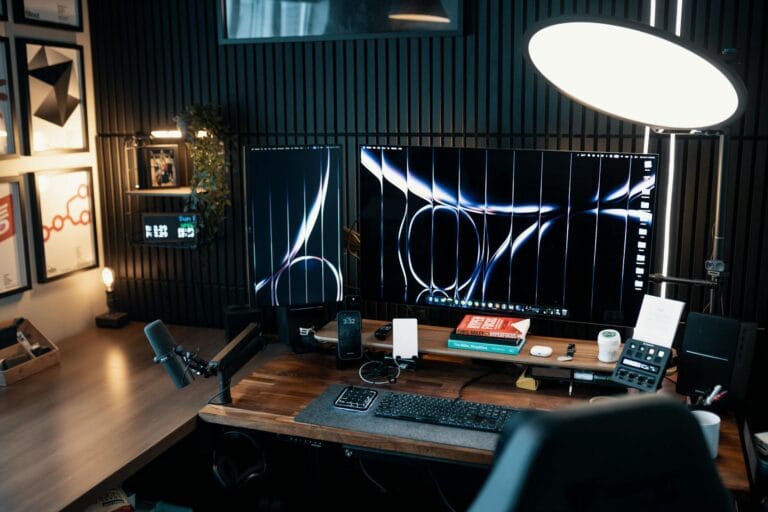

How To Stop Procrastinating For Good
Okay, I’ll be honest with you, I’ve rewritten this post more times than I’d like to admit because procrastination is something I genuinely struggle with too. It’s one of those topics that sounds simple on the surface but runs so much deeper than most people realize. If you’re here looking for real, actionable advice on how to stop procrastinating for good, you’re not alone, and you’re definitely not broken. Procrastination isn’t a character flaw. It’s a deeply human response to stress, uncertainty, and tasks that feel bigger than they actually are. The good news? Once you understand what’s driving it, you can work with your brain instead of fighting it. This guide breaks down the psychology behind procrastination and gives you practical strategies that actually stick, no motivational speeches required.
Why You Procrastinate (It’s Not What You Think)
Most people assume procrastination is about laziness or poor time management. Research tells a different story. A landmark study published in Psychological Science found that procrastination is fundamentally an emotion regulation problem, people avoid tasks not because they don’t care, but because those tasks trigger negative feelings like anxiety, self-doubt, or boredom. Your brain is simply trying to protect you from discomfort in the short term, even when it creates bigger problems down the road.
Understanding this changes everything. When you treat procrastination as a productivity issue, you reach for planners and timers. But when you treat it as an emotional issue, you start asking much better questions, like “Why does this task feel threatening to me?” That shift in perspective is where lasting change actually begins.
The Real Cost of Putting Things Off
It’s easy to write off a delayed project or a late email as no big deal. But procrastination compounds. According to a study by Dr. Piers Steel, a University of Calgary professor and author of The Procrastination Equation, roughly 95% of people admit to procrastinating, with about 25% identifying as chronic procrastinators. Chronic procrastination is linked to higher stress levels, worse health outcomes, lower income, and reduced relationship satisfaction. That’s not meant to scare you, it’s meant to make the case that fixing this is genuinely worth your time and attention.
The hidden cost isn’t just the missed deadline. It’s the mental weight of carrying an unfinished task around all day. It’s the guilt loop that kicks in at 11pm. And it’s the slow erosion of trust you have in yourself to follow through. Many of us have felt that quiet, nagging sense that we’re letting ourselves down, and that feeling alone is exhausting.
Common Procrastination Triggers to Watch For
Before you can break the habit, it helps to recognize what’s actually setting it off. Here are the most common triggers busy professionals and students deal with:
- Perfectionism: If you can’t do it perfectly, you’d rather not start. The blank page feels safer than an imperfect draft.
- Task ambiguity: When you’re not exactly sure what “done” looks like, starting feels impossible.
- Fear of failure (or success): Some tasks carry real emotional stakes, a job application, a creative project, a difficult conversation.
- Decision fatigue: After a long day of mental effort, your brain defaults to the path of least resistance.
- Overwhelming scope: Big projects trigger avoidance because your brain can’t see a clear first move.
Identifying your personal trigger isn’t a therapy exercise, it’s a practical diagnostic tool. Once you know what’s behind the avoidance, the fix becomes much more specific and effective.
How to Stop Procrastinating for Good: A Step-by-Step System
This isn’t a list of productivity hacks you’ll forget by Thursday. This is a repeatable system built on behavioral psychology and tested by people with real jobs, real deadlines, and real distractions. Work through these steps in order when you feel the pull of procrastination kicking in.
- Name the feeling, not the task. Before you open your laptop or touch your to-do list, pause and ask: “What emotion is making me want to avoid this?” Naming the emotion, anxiety, boredom, dread, reduces its power. This takes 30 seconds and genuinely works.
- Shrink the entry point. Don’t commit to finishing the task, commit to the smallest possible first action. Not “write the report,” but “open the document and type one sentence.” Your brain resists starting, not continuing.
- Set a two-minute timer. Tell yourself you only have to work for two minutes. Most of the time, you’ll keep going once you’ve started. If you stop after two minutes, that’s fine, you still made contact with the task, which breaks the avoidance pattern.
- Remove the friction, not just the distraction. Put your phone in another room, yes, but also make the task itself easier to access. Have the document open before you sit down. Set the book on your desk the night before. Reduce the steps between you and starting.
- Build a “done for now” ritual. Procrastination feeds on open loops. At the end of each work session, write one sentence about exactly where you stopped and what the next action is. This closes the loop mentally so the task stops haunting you during off hours.
- Use implementation intentions. Research by psychologist Peter Gollwitzer shows that saying “I will do X at Y time in Z location” dramatically increases follow-through compared to just intending to do something. Be specific: “I will draft the intro paragraph at 9am at my kitchen table.”
- Celebrate small completions. Your brain learns from reward signals. After finishing a task, even a small one, take 10 seconds to acknowledge it genuinely. Not as a performance, just a quiet “I did that.” Over time, your brain starts associating task completion with a positive feeling instead of relief-from-dread.
Building an Environment That Works With You
Willpower is a limited resource, and relying on it exclusively is a losing strategy. Your environment does a massive amount of heavy lifting, or heavy pulling in the wrong direction. I know from experience that even small tweaks to your physical space can completely shift how easy or hard it feels to just get started. A few simple changes make a real difference:
- Keep your workspace clear of everything that doesn’t belong to the current task.
- Use separate browser profiles or apps for work versus leisure, context switching is a procrastination accelerant.
- Schedule your hardest tasks during your personal peak energy window, not as a default filler for “whenever I get to it.”
- Tell someone what you’re planning to do. Social accountability isn’t cheating, it’s smart use of human psychology.
What to Do When You Fall Off (Because You Will)
Every system breaks down occasionally. You’ll have weeks where life takes over, where the strategy flies out the window, and where you end up back in a familiar spiral of avoidance. That’s normal, and it doesn’t mean the system failed. It means you’re human.
The key is what happens next. Research on self-compassion by Dr. Kristin Neff at UT Austin shows that people who treat themselves kindly after setbacks are more likely to get back on track than those who self-criticize. Beating yourself up for procrastinating actually makes you more likely to procrastinate again, because guilt is another negative emotion your brain will want to escape.
When you slip, do one small thing immediately. Not to “make up for it”, just to re-establish the pattern. Then move on without the dramatic self-assessment.
Frequently Asked Questions
Is procrastination a sign of ADHD or another condition?
Procrastination is very common in people with ADHD, anxiety, and depression, but it’s also widespread among people without any diagnosis. If your procrastination feels severe, persistent, and significantly impacts your daily functioning, it’s worth speaking with a mental health professional. For most people, though, it’s a learnable habit that responds well to the right strategies.
Why do I procrastinate even on things I actually want to do?
This catches a lot of people off guard. Even enjoyable tasks can trigger avoidance if they carry emotional weight, creative projects that feel tied to your identity, goals that matter a lot to you, or things where the stakes feel high. Perfectionism often shows up here. The fix is the same: shrink the entry point and separate “starting” from “succeeding.”
How long does it take to stop procrastinating for good?
There’s no universal timeline, and honestly, “for good” means building a consistent relationship with the habit, not achieving some permanent state of perfect productivity. Most people start noticing real changes within two to three weeks of applying a consistent system. The goal isn’t to never feel the pull of avoidance again. It’s to have reliable tools for when you do.
Final Thoughts
The bottom line is, procrastination is one of those things that feels personal and permanent when you’re stuck in it, but it’s neither. It’s a learned response to discomfort, and like any learned response, it can be unlearned with the right approach. Start small, be consistent, and give yourself credit for the progress you make, even when it doesn’t feel dramatic. The goal isn’t a perfectly optimized schedule. It’s a version of you that trusts yourself to show up when it counts. That’s genuinely worth building toward.
Related Articles
- Time Blocking For Beginners
- Pomodoro Technique For Students
- How To Set Goals You Will Actually Achieve