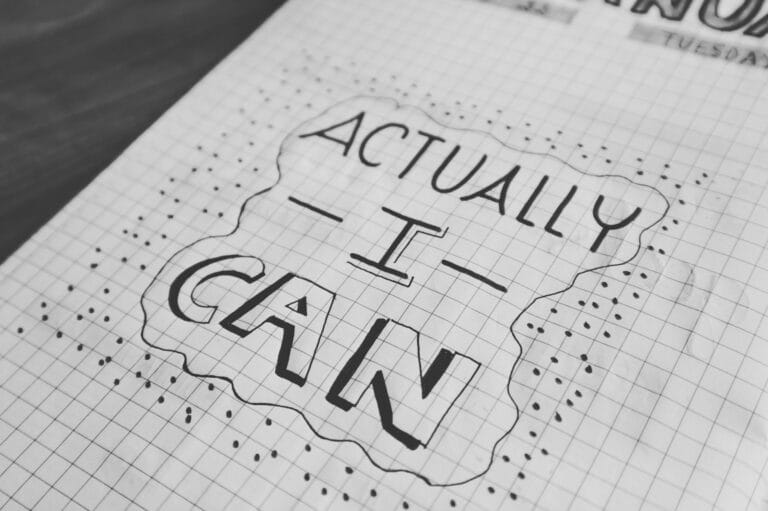

Perfectionism And Anxiety How To Break The Cycle
Okay, I have to be honest with you, I’ve rewritten this article more times in my head than I’d like to admit, second-guessing every word choice. And yes, I realize the irony of saying that in an article about perfectionism. If you’ve ever stayed up until midnight redoing a presentation that was already good enough, or avoided starting a project because you feared it wouldn’t be perfect, you’re in very good company. The link between perfectionism and anxiety, and how to break the cycle, is something millions of professionals quietly wrestle with every single day. What starts as high standards can slowly become a trap: the harder you push for flawless results, the more anxious you feel, and the more anxious you feel, the harder you push. This loop is exhausting, and it’s costing you more than just sleep.
Why Perfectionism and Anxiety Feed Each Other
Perfectionism isn’t simply about wanting to do good work. Psychologists distinguish between adaptive perfectionism, healthy striving with flexibility, and maladaptive perfectionism, where your self-worth becomes completely tied to your output. The maladaptive kind is where anxiety moves in and sets up camp.
Here’s the core problem: perfectionism creates impossible standards. When you can’t meet those standards (and no one consistently can), your nervous system reads that as failure. Anxiety spikes. To manage that anxiety, you either overwork to avoid the threat of falling short, or you procrastinate to avoid the discomfort of possibly failing. Both responses reinforce the perfectionist pattern, keeping the cycle spinning.
According to a study published in Psychological Bulletin, perfectionism has increased significantly across generations, with researchers noting that young people today are substantially more perfectionistic than those measured in the 1980s and 1990s, and this rise correlates with increased rates of anxiety and depression (Curran & Hill, 2019). This isn’t a personal failing. It’s a cultural pressure that’s been building for decades.
How to Recognize the Perfectionism-Anxiety Cycle in Your Own Life
Before you can break a cycle, you need to see it clearly. The perfectionism-anxiety loop often disguises itself as productivity, ambition, or professionalism, which is part of what makes it so sneaky. Here are some honest signs it may be running your life:
- You struggle to delegate because others “won’t do it right”
- You reread emails multiple times before sending them, even casual ones
- You feel a heavy sense of dread before starting new tasks
- Completing something doesn’t feel satisfying, you only notice what’s still wrong
- You frequently compare your behind-the-scenes process to others’ highlight reels
- Rest feels uncomfortable or unearned unless everything is finished
- You avoid asking for feedback because criticism feels like a verdict on your worth
If several of these feel uncomfortably familiar, you’re not broken, you’re just caught in a very human pattern. Many of us have felt this way for so long that it starts to feel like just “who we are.” The good news is that patterns can be interrupted.
The Science Behind Breaking the Cycle
Cognitive behavioral therapy (CBT) research consistently shows that the thoughts driving perfectionism, things like “if I make a mistake, I’m incompetent” or “good enough is the same as failure”, are distortions, not facts. These automatic beliefs trigger the anxiety response, which then drives perfectionist behavior as a coping mechanism.
Acceptance and Commitment Therapy (ACT) adds another useful layer: instead of fighting anxious thoughts, you learn to observe them without letting them dictate your actions. You acknowledge “I’m afraid this won’t be good enough” without immediately acting on that fear by overworking or avoiding. This creates psychological flexibility, which is one of the strongest predictors of mental wellness in working adults.
Self-compassion research from Dr. Kristin Neff at the University of Texas also shows something counterintuitive: people who treat themselves with kindness after mistakes actually maintain higher motivation and performance than those who self-criticize harshly. Self-compassion doesn’t lower your standards. It removes the threat that makes those standards feel so suffocating.
A Practical Step-by-Step Guide to Breaking the Perfectionism-Anxiety Cycle
- Name the distortion, not just the feeling. When anxiety spikes around a task, pause and ask: “What am I actually afraid will happen?” Write it down. Most perfectionistic fears follow predictable patterns, fear of judgment, fear of failure, fear of being exposed as not good enough. Naming the specific fear separates you from it just enough to question whether it’s true.
- Set a “good enough” benchmark before you start. This is practical, not lazy. Before beginning any project, define explicitly what a completed, functional version looks like, not a perfect one. Write: “This report is done when it answers the three key questions, is under five pages, and has been proofread once.” A clear finish line prevents the endless loop of revision that perfectionism loves.
- Practice intentional imperfection in low-stakes situations. Send a casual Slack message without rereading it. Submit a first draft of internal notes without polishing. Leave a small task 90% done and move on. These small acts of deliberate “good enough” rewire your nervous system’s association between imperfection and danger. Each time nothing catastrophic happens, the anxiety response weakens a little.
- Schedule recovery time as seriously as work time. Perfectionism thrives in exhaustion. When you’re depleted, your threat detection system (the amygdala) becomes hypersensitive, making every imperfection feel like a crisis. Block actual rest, not passive scrolling, but genuine recovery, into your week. Treat it as non-negotiable. Your brain literally cannot regulate anxiety without it.
- Audit your self-talk after mistakes. After something goes wrong, notice what you say to yourself. Would you say those words to a friend or colleague in the same situation? If not, rewrite the script. Replace “I can’t believe I missed that” with “That was a mistake. What can I learn, and what’s the actual next step?” This isn’t toxic positivity, it’s accurate thinking, because catastrophizing is never more accurate than clear-eyed assessment.
- Get support from someone who challenges the pattern. A therapist trained in CBT or ACT can accelerate this process significantly. But even a trusted colleague or mentor who gently pushes back when you’re spiraling can interrupt the cycle. Isolation feeds perfectionism. Honest connection tends to dissolve it.
Building a Healthier Relationship With Standards
Breaking the perfectionism-anxiety cycle doesn’t mean abandoning excellence. It means decoupling your self-worth from your output. You can care deeply about your work without needing it to be flawless to feel okay about yourself. That shift, from “I am what I produce” to “I produce things, and I am more than that”, is where lasting change lives.
One useful reframe: think of your standards as a compass, not a judge. A compass tells you which direction to head. It doesn’t punish you for the miles already walked or declare the journey a failure because you took a detour. High standards used like a compass give you direction while leaving room for the reality that progress is rarely linear and almost never perfect.
Also worth noting: the people you admire most are almost certainly shipping imperfect work. The product that changed your life had bugs in version one. The book that moved you had sections the author wanted to rewrite. Done and useful consistently beats perfect and delayed. Your audience, your team, and your career all benefit more from consistent output than from occasional flawless delivery.
Frequently Asked Questions
Is perfectionism always a bad thing?
Not necessarily. Adaptive perfectionism, setting high standards while maintaining flexibility and self-compassion when things don’t go as planned, can fuel genuine achievement. The problem arises with maladaptive perfectionism, where self-worth is entirely conditional on results and mistakes feel catastrophic. The goal isn’t to lower your standards. It’s to loosen the grip those standards have on how you feel about yourself as a person.
Can perfectionism cause anxiety disorders?
Perfectionism is considered a significant risk factor for generalized anxiety disorder, social anxiety, and OCD-related patterns, among others. It doesn’t cause anxiety in isolation, but it creates a mental environment where anxiety thrives. Conversely, existing anxiety often intensifies perfectionist behavior as a way of trying to feel more in control. The two reinforce each other, which is why addressing both together, often through therapy, tends to be more effective than treating either alone.
How long does it take to break the perfectionism-anxiety cycle?
There’s no fixed timeline, and that answer is intentional, not vague. For some people, practical strategies like “good enough” benchmarks and scheduled rest produce noticeable relief within weeks. For others, especially when the pattern is deeply rooted in early experiences or tied to an anxiety disorder, working with a therapist over several months creates more durable change. Progress also isn’t linear. You’ll have weeks where the old pattern surges back. That’s part of the process, not evidence that the process isn’t working.
Final Thoughts
The bottom line is this: the cycle between perfectionism and anxiety is real, it’s exhausting, and, this part matters, it’s genuinely breakable. You don’t need to become someone who doesn’t care about quality. You need to become someone who can produce quality work without your nervous system treating every imperfect draft as a personal catastrophe. That’s a learnable skill, not a personality transplant. Start with one step from this list this week. Name one fear, set one “good enough” benchmark, send one unpolished message. Small moves, repeated consistently, are how the cycle breaks, not with one dramatic insight, but with a hundred quiet choices to trust yourself enough to just keep going.