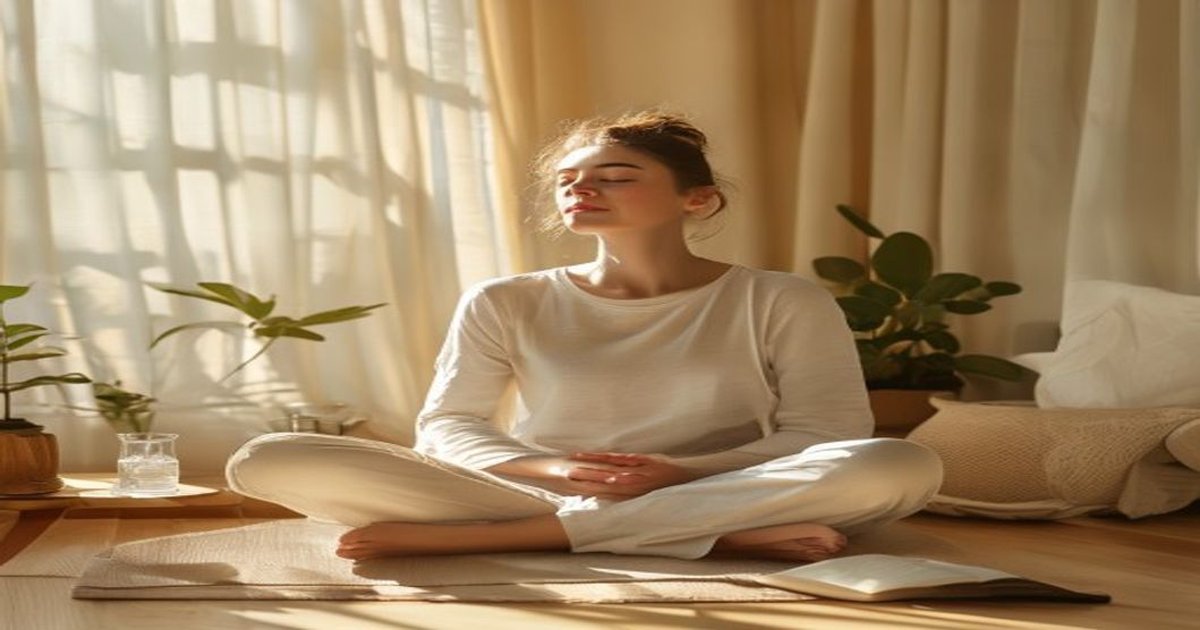
Learning how to relax your mind is not a luxury, it's survival in a world that never stops demanding your attention. Right now, millions of people feel their thoughts spiraling, their shoulders tensed, their nervous system in overdrive. You're not broken for feeling this way.
Mental exhaustion hits differently than physical tiredness. It sneaks up through constant worrying, endless mental loops, and the feeling that your brain has been running a marathon since you woke up. Your mind deserves the same care you give your body after a workout.
The good news: you don't need hours of meditation or expensive therapy sessions to find relief. Simple, science-backed mental relaxation techniques can calm your nervous system in minutes and give you back control over your thoughts. Let's start today.
How to relax your mind using five proven mental relaxation techniques: breathing exercises, body scans, grounding methods, journaling, and the 5-4-3-2-1 sensory reset. These science-backed strategies work in minutes and reduce anxiety, racing thoughts, and mental exhaustion naturally.
What Does Mental Relaxation Really Mean?
Mental relaxation is the state where your nervous system shifts from fight-or-flight into rest-and-digest mode. This isn't just feeling less busy, it's a measurable biological shift in your brain chemistry. Research from Harvard shows that true relaxation lowers cortisol, reduces blood pressure, and literally rewires the neural pathways that fuel anxiety.
When your mind is relaxed, your thoughts slow down, your body tension releases, and you regain perspective on problems that felt catastrophic five minutes earlier. Most people confuse distraction (scrolling your phone) with relaxation. Real mental relaxation engages your parasympathetic nervous system.
Your action today: Notice the difference between numbing your mind and actually relaxing it. Numbing feels empty afterward. True relaxation leaves you clearer, calmer, and more grounded.
- Mental relaxation activates the vagus nerve, your body's calm switch
- It reduces activity in the default mode network (your overthinking brain)
- Real relaxation takes 5-20 minutes, not hours

What Are the Signs Your Mind Needs to Relax?
Your mind is sending distress signals right now, and you might be ignoring them. Racing thoughts at 3 AM, an inability to focus on one task, constant decision fatigue, or that trapped feeling in your chest are all red flags that your mental relaxation tank is empty. Studies show 70% of people experience these symptoms weekly but never address the root cause.
You might also notice irritability, memory problems, or that everything feels harder than it should. These aren't character flaws, they're symptoms of a nervous system that's been sprinting without rest. Your brain uses 20% of your body's energy, and mental exhaustion drains it faster than physical work.
Pay attention to: When your mind starts spinning uncontrollably, when decisions feel impossible, or when you can't remember simple details. These are your cues to stop and apply a mental relaxation technique immediately.
- Constant mental chatter you can't turn off
- Difficulty falling or staying asleep despite being tired
- Feeling anxious even when nothing is objectively wrong
- Physical tension in shoulders, jaw, or chest
- Overwhelm that feels disproportionate to the actual situation
Why Does Your Mind Struggle to Relax Naturally?
Your brain is hardwired to protect you, which means it stays alert for threats. In our ancestors' world, this hypervigilance kept them alive. In your modern world, it keeps you anxious about emails, social media, and imaginary worst-case scenarios. Your amygdala (fear center) evolved to activate fast and stick around, making relaxation feel unnatural.
The constant stream of notifications, news, and stimulation has rewired your nervous system to expect danger. Neuroscientists found that the average person now receives the same amount of information in one day that someone in 1900 received in a lifetime. Your mind isn't broken, it's overloaded. Additionally, many people were raised in environments where relaxation was viewed as laziness, creating guilt around mental rest.
The truth: Your mind isn't refusing to relax out of stubbornness. It's literally been trained by your environment and history to stay vigilant. Relaxation is a skill you rebuild, not something you've lost permanently.
- Evolution wired your brain for threat detection, not peace
- Modern life triggers your stress response 50+ times daily
- Chronic stress rewires neural pathways toward anxiety
- Your nervous system needs retraining, not blame

How to Relax Your Brain Fast With 5 Proven Techniques
The 4-7-8 breathing method is the fastest way to flip your nervous system switch. Breathe in through your nose for 4 counts, hold for 7, exhale through your mouth for 8. This activates your vagus nerve immediately and tells your body it's safe. A single round takes 30 seconds and works even when you're skeptical.
Technique 1: Box Breathing for Instant Calm. Inhale for 4 counts, hold for 4, exhale for 4, hold for 4. Repeat 5 times. This technique is used by Navy SEALs and works in high-stress moments because it anchors your mind to a simple pattern instead of spiraling thoughts.
Technique 2: Progressive Body Scan (5 minutes). Starting at your toes, tense each muscle group for 5 seconds, then release. Move up through your legs, core, arms, and head. This interrupts the mind-body feedback loop where tension fuels anxiety and anxiety fuels tension. Your mind can't spin stories while it's focused on physical sensation.
Technique 3: The 5-4-3-2-1 Grounding Method. Name 5 things you see, 4 you can touch, 3 you hear, 2 you smell, 1 you taste. This pulls your mind out of future catastrophizing and into present reality, where you're actually safe. It rewires your brain from threat-mode to observer-mode in 3-5 minutes.
Technique 4: Journaling Brain Dumps. Write every racing thought onto paper without editing for 10 minutes. Don't organize or solve, just empty your brain. This externalizes mental clutter and creates psychological distance from anxious thoughts. Studies show expressive writing reduces intrusive thoughts by 30% in one session.
Technique 5: The Conscious Pause (1 minute anytime). Stop whatever you're doing. Notice three specific details around you. Take 3 slow breaths. Notice how your body feels. This micro-reset prevents small stress from building into mental overwhelm throughout your day.
- Breathing works because it's the one nervous system function you control
- Body scans interrupt the anxiety loop at the physical level
- Grounding techniques silence the storytelling mind instantly
- Journaling gives your intrusive thoughts a container outside your head
- Micro-pauses prevent stress from accumulating
Your immediate action: Choose ONE technique that resonates and commit to it for 3 days. Master one before adding others. Success builds momentum.
How to Build Daily Mental Relaxation Into Your Routine
Mental relaxation isn't something you do when you finally have time. It's something you schedule like brushing your teeth, because your mind health determines everything else in your life. People who practice one 10-minute relaxation session daily show 40% less anxiety and 35% better sleep quality within two weeks, according to neuroscience research.
Start small and specific. Not 'I'll meditate more,' but 'I'll do 4-7-8 breathing while my coffee brews each morning.' Not 'I'll relax,' but 'I'll do a 5-minute body scan before bed.' Specificity removes willpower friction. Your brain needs a clear signal, not vague intentions.
Build these anchors: Morning relaxation sets your nervous system baseline for the day. Midday resets prevent stress accumulation. Evening wind-downs prepare your brain for sleep. This three-point system works because it prevents acute stress from becoming chronic.
- Morning (2-3 minutes): 4-7-8 breathing or grounding technique
- Midday (1-2 minutes): Conscious pause between tasks
- Evening (5-10 minutes): Body scan or journaling
- Weekend (optional 15 minutes): Deeper practice like extended meditation
If you struggle with racing thoughts at night, consider how you can implement the techniques from learning how to stop overthinking at night as your evening relaxation practice. Pairing relaxation with your existing wind-down routine removes the effort of remembering to do it.
The habit formula: Trigger (after I pour my morning coffee) + Behavior (I do 4-7-8 breathing) + Reward (I feel calm and clear). Repeat this for 21 days and relaxation becomes automatic, not another item on your to-do list.

What Does This Look Like in Real Life?
Sarah used to wake up at 2 AM with her mind racing through worst-case scenarios, catastrophizing about work presentations, finances, and relationships. She'd lie there for hours, her shoulders tensed, her jaw clenched, feeling more exhausted as the night dragged on. During the day, she couldn't focus at work, snapped at her partner, and felt like she was failing at everything. She tried meditation apps but quit after a week because sitting quietly only gave her mind more space to spiral. Her doctor mentioned medication, but Sarah wasn't ready for that yet.
Then she started with just the 5-4-3-2-1 grounding technique when anxiety hit at night. Within 3 nights, she noticed her mind actually quieted down because she was anchored to the present moment instead of future fears. She added morning 4-7-8 breathing before work and a body scan before bed. In two weeks, she slept through the night. In six weeks, her coworkers noticed she seemed lighter and more focused. The racing thoughts didn't disappear, but they lost their power because Sarah had given her mind somewhere safe to go when they showed up.
Related Articles
- → reduce stress naturally with evidence-based strategies
- → master the skill of stopping anxious thought spirals
- → recognize mental exhaustion before it crashes your week
- → break free from the overthinking cycle that feeds anxiety
- → 5 Ways to Feel Calm Instantly: Stop Stress Before It Stops You
- → 7 Ways to Feel Happy Again: Reclaim Your Joy Starting Today
- → 5 Ways to Stop Overthinking at Work: Reclaim Your Focus and Peace
- → 5 Ways to Stop Anxiety Before Sleep: Reclaim Your Peaceful Nights
- → 5 Ways to Overcome Fear of Failure Anxiety Before It Stops You
- → 5 Ways to Break Negative Thinking Before It Controls Your Life
- → 3 Ways to Feel in Control of Your Mind: The Mental Discipline Blueprint
- → 5 Steps to Emotional Burnout Recovery: Rebuild Your Inner Strength Today
- → 5 Ways to Detox Your Mind From Negative Thoughts and Reclaim Your Peace
- → 5 Ways to Stay Calm Under Pressure: Master Your Mind Before Stress Wins
- → 7 Signs of Anxiety Disorder You're Probably Ignoring (And How to Take Control Back)
- → 5 Ways to Stop Panic Attacks: Take Back Control Right Now
- → 5 Ways to Build Confidence Fast: Your Mental Breakthrough Starts Today
- → 7 Ways to Stop Worrying About the Future: Take Back Control Today
- → 5 Ways to Improve Mental Clarity and Focus Fast (Brain Fog Gone)
- → 5 Ways to Reset Your Life and Start Fresh Today
- → 5 Ways to Change Your Mindset and Transform Your Life Today
- → 7 Ways to Improve Your Life Starting Today: Your Personal Breakthrough Awaits
- → 5 Ways to Stop Overthinking Everything: Break Free From the Mental Loop
- → 7 Signs of Mental Burnout and How to Recover: Your Reset Guide
Frequently Asked Questions
Where to Go From Here
You don't need a perfect life or total silence to relax your mind. You just need one technique, practiced consistently, that tells your nervous system it's actually safe to rest. Today, pick the one method that called to you most as you read. Tomorrow, do it again. By next week, you'll notice a difference.
Your mind didn't break overnight, and it won't heal overnight either. But every single day you practice relaxation, you're rewiring the neural pathways that fuel anxiety. You're teaching your body that calm is possible. You're proving to yourself that you have control over your mental state, not the other way around.
Start with just one conscious breath right now. Feel the shift. That's your proof that change is real and it starts immediately. You've got this.